







The Caves Fruit Trees (Popular)
The Caves Fruit Trees and the most popular plants Australians buy for mail order. With fruit trees you should consider climate suitability.
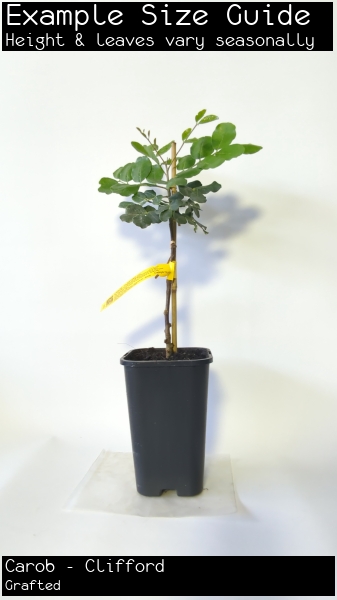
Carob - Clifford
$99.00 ($69.00-$119.00 choose a size)
This one of the two available self pollinating Hermaphrodite varieties, which makes it a must for all orchards. The medium size beans are of good quality with 50%+ sugar content. An early fruit bearer on young trees. Yields are excellent with irrigation. Trees prefer neutral to alkaline soil for best results. Supply of this plant is limited please ask to be notified of availability and we will do our best to propagate these and help you in the coming years.

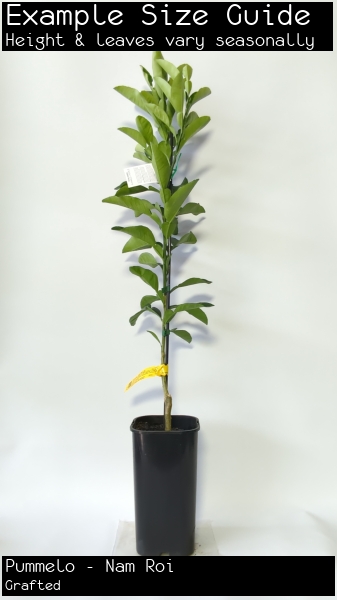
Pummelo - Nam Roi
$64.00
A recently imported Pummelo from Vietnam, where it is a very popular seedless variety. Pummelos are similar to grapefruits, but larger and much sweeter. Most adaptable citrus to tropical areas. Grows very well in subtropical climates too- like we have here at Daleys in Kyogle. Very large fruits!
Special
Dragon Fruit - Aussie Gold
$24.00 ($14.75-$29.00 choose a size)
Produces large fruit that are yellow in colour with white flesh. Unlike other yellow varieties, the Aussie Gold is a thornless Dragon Fruit. Excellent quality up to 1.5kg in weight. Good flavour and an attractive, easy to handle fruit. Does best with a pollinator. You could use the Pearl Dragonfruit as pollinator.

Buy 2+ @$24.00ea usually:$29.00ea
Nectarine - Sunwright
$59.00
A yellow-fleshed nectarine to 150 hours chill. A semi -clingstone, oval fruit, small to medium size with attractive colour, (80 - 90% blush), slightly soft flesh, good flavour. Very early fruiting. Thin fruit to get good fruit size.

Guiana Chestnut
$39.00 ($39.00-$49.00 choose a size)
Fragrant, stunning flowers distinguish the Guiana Chestnut. Makes a beautiful landscape tree. Native to estuaries and lake shores in the tropical rainforests of Mexico, Central and South America The seeds have been recommended for eating eaten either raw or roasted, however recent research has indicated that there may be toxic compounds present that are not neutralised through cooking. When roasted or fried in oil they taste like chestnuts or cashews They have also been ground and used as a flour substitute when baking bread. The young leaves and flowers have also been cooked and eaten as a vegetable, however no mention is made of this in the research.It has also been suggested fungal organisms may be converting oils into inedible compounds. Production of nuts starts within a few years. The large, white, self-fertile flowers display spectacular clusters of 10cm cream-white stamens. The fruit is a woody green five-valved pod up to 30cm in length. The capsules that follow burst open when the seeds are ripe. The plant grows well in mild inland and coastal areas. The plant will tolerate brief exposure to low temperatures but won't tolerate frost. A frost-free location with some protection from hot, drying winds is the best choice for the plant. It will take full sun to partial shade. Malabar chestnuts are not overly fussy about soil as long as it is well drained. They are semi-deciduous. The flowers of the Guiana chestnut are spectacular, they emerge from foot long buds where they are almost hidden amongst the dense foliage. The long dark red brown coloured petals droop and disappear to show off the dramatic clusters of scarlet tipped stamens. The fruits that follow the flowers are football shaped large woody pods that can reach 30cm in length. The tightly packed nuts inside enlarge until the pods burst open to reveal them. The Guiana Chestnut does best in sites that are protected from drying winds, it can be grown in full sun or part shade and it requires frequent and generous watering. WARNING: SEEDS SHOULD NOT BE EATEN


pin_drop
This Postcode: 4702
place Cawarral Fruit Trees place Gracemere Fruit Trees place Parkhurst Fruit Trees place Canoona Fruit Trees place Bouldercombe Fruit Trees place The Caves Fruit Trees place Sapphire (qld) Fruit Trees place Anakie (qld) Fruit Trees place Rolleston Fruit Trees place Rubyvale Fruit Trees place Boolburra Fruit Trees place Alton Downs Fruit Trees place Kabra Fruit Trees place Tungamull Fruit Trees place Stanwell Fruit Trees place Willows Fruit Trees place Keppel Sands Fruit Trees place Coorooman Fruit Trees place Ridgelands Fruit Trees place Comet Fruit Treespin_drop
Previous Postcode: 4701
place Park Avenue Fruit Trees place Frenchville Fruit Trees place Norman Gardens Fruit Trees place Berserker Fruit Trees place Kawana Fruit Trees place Rockyview Fruit Trees place Koongal Fruit Trees place Lakes Creek Fruit Trees place North Rockhampton Fruit Trees place Nerimbera Fruit Trees place Rockhampton North Fruit Trees place Mount Archer Fruit Trees place Ironpot Fruit Trees place Parkhurst Fruit Trees place Limestone Creek Fruit Trees place Rockhampton Dc Fruit Trees place Red Hill Rockhampton Fruit Trees place Nankin Fruit Trees place Sandringham Fruit Treespin_drop