







Curry Plant flowers Helichrysum italicum

(1/5) Curry Plant flowers Helichrysum italicum By 6th Happiness [CC BY-SA 3.0] (Photo Credits)

Curry Plant - Helichrysum italicum

(2/5) Curry Plant - Helichrysum italicum By Assianir [CC BY-SA 4.0] (Photo Credits)

Curry Plant For Sale

(3/5) Curry Plant For Sale

Leaf of the Curry Plant

(4/5) Leaf of the Curry Plant

Curry Plant For Sale

(5/5) Curry Plant For Sale

fullscreen1

Curry Plant

Helichrysum italicum
The young shoots and leaves are stewed in Mediterranean meat, fish or vegetable dishes until they have imparted their flavour, and removed before serving. It grows on dry, rocky or sandy ground around the Mediterranean region. The stems are woody at the b... Read More

$19.75 ($18.75-$19.75 choose a size)

Specifications of Curry Plant

Preferred Climate Subtropical, Warm TemperateLearn About Climate Zones

Grown From CuttingLearn About Propagation Methods

Max Height (when in the ground with good conditions) 0-1m

Plants required to Pollinate 1 (Self Pollinating)Learn about Pollination

Can it Handle Frosts? Yes

Amount of leaves in Winter? All Leaves (Evergreen)

Water Requirements Moderate Watering, Drought Hardy (Little Watering)

Time to Fruit/Flower/Harvest 2-3 Years

Sun or Shade Full (Sun:80%-100%)

Preferred Soil Type Good Drainage

Soil pH Neutral (6.6-7.3pH)

Fruiting/Harvest Months January, February, March, April, May, June, July, August, September, October, November, December

Fertiliser All Purpose

Growth Rate Medium

Create a Filter to find similar plants

Customers also bought

These plants are often purchased together. Also check plant information for suitability in your orchard.

Carambola Starfruit - Kary

$59.00 ($59.00-$79.00 choose a size)

Excellent flavour, bright skin and juicy flesh with few seeds, bearing a summer and winter crop. It exhibits more cold tolerance than other varieties. Carambolas are also called Star Fruit Carambola trees have an attractive weeping habit, producing a profusion of pink flowers. The foliage is delicate on young trees, and our potted plants are known for their older leaves to turn yellow and drop during transport to conserve energy. This is not a problem long term. With care and acclimatisation they will bounce back

Chestnut - Marone

$99.00 ($84.00-$99.00 choose a size)

This large-nut was sourced from WA but is originally of Italian origin. Fairly upright habit exhibiting Asian characteristics such as fine wood and pointy buds. Excellent quality.

Pecan - Desirable (A) SP

$46.95 ($29.00-$46.95 choose a size)

A - SP - Proven variety that produces a large nut with a thick shell. The meaty kernel is of very good quality. Light producer in early years with good production by year 12 when it crops prolifically and consistently. Preferred variety for cooler areas of the subtropics or warm temperate zones

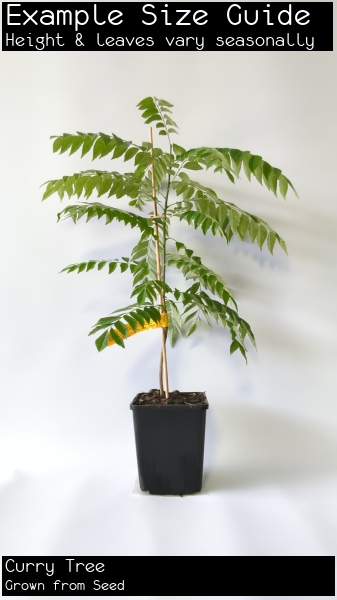
Curry Tree

$18.90 ($18.90-$79.00 choose a size)

Fresh leaves from this tree are an indispensable ingredient in Indian cooking. The leaves are pretty much unknown in the West because they lose most of their flavour when dried. They have a distinct, spicy curry-like flavour and odour.Warning: The seeds are poisonous and should not be eaten
Aramex Free Freight

Myoga Ginger

$18.75 ($18.75-$19.90 choose a size)

a native of Japan where it is grown commercially for its delicious spring shoots and young flower buds produced in autumn. Myoga flower buds are used in soups, tempura, pickled and as a spice. Like most gingers it is an understory of forests and so grows best under some shade. It can get sunburned leaves which will reduce its vigor if grown in full sun. In winter the top growth dies back and it regenerates in spring from the underground rhizomes.
Aramex Free Freight

Yacon - Apple of the Earth

$19.75 ($4.90-$19.75 choose a size)

Also known as the 'Earth Apple' this is one of the ancient crops of the Inca's. This relative of the sunflower is popular to the people of Columbia, Ecuador and Argentina. The plant produces large tubers similar in appearance to sweet potatoes, but they have a much sweeter taste and crunchy flesh. The tubers can be eaten raw as a refreshing treat on their own, finely sliced and mixed into salads,boiled or baked, fried as chips or prepared as a pickle. There is also commercial interest as a flavouring for yoghurt. They are sweet, juicy and almost calorie free. The main stem can also be used like celery. The texture and flavour have been described as a cross between a fresh apple and watermelon. The plants are vigorous, herbaceous, perennial and extremely hardy tolerating hot summers, drought and poor soils. The foliage of the plant dies back in the winter after flowering at which time the tubers are harvested carefully to avoid damage to the tubers. They tend to continue sweetening if left in a cool dry and dark place for a week or two before consumption. The reddish rhizomes are then replanted for the next season.

Curry Plant Reviews & Tips

Star Rating

branny1
★★★★★ 10y ago

RUNCORN, QLD, Australia

Wonderful little thing that loves my neglectful nature, thank goodness!! Found as tiny tubestock plant at Bunnings September 2015, now in September 2016 it is a lovely knee high, quite wide bush, that seems to do best when I ignore it and let the rain ...


  • Subscribe
  • Postage Free Truck
  • Plant List
  • Calculate Freight