







If we could fly then these flowers would have us swarming. Colourful, fragrant and dynamic!

(1/2) If we could fly then these flowers would have us swarming. Colourful, fragrant and dynamic!

Yesterday-Today-Tomorrow (Brunfelsia calycina) in flower

(2/2) Yesterday-Today-Tomorrow (Brunfelsia calycina) in flower By Mokkie [CC BY-SA 3.0] (Photo Credits)
fullscreen1

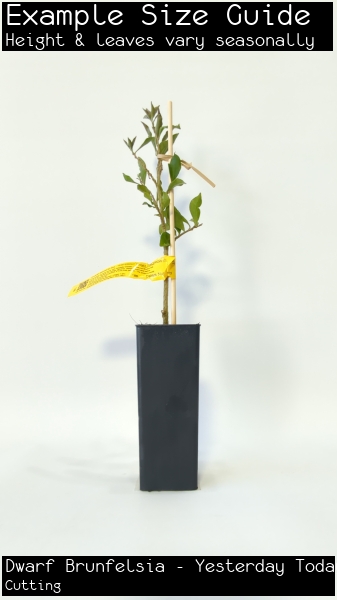
Dwarf Brunfelsia - Yesterday Today Tomorrow

Brunfelsia pauciflora
Trees and Plants > Hedge Plants > Dwarf Brunfelsia - Yesterday Today Tomorrow
A beautifully scented shrub with delightful shades of mauve flowers that fade to white. Perfect for cottage gardens, hedges, pots and patios. Thrives on humidity and perfects a frost-free garden. The scent is sweet and seductive.
Other Names: Brunsfelsia latifolia

$18.75

Aramex Free Freight

Specifications of Dwarf Brunfelsia - Yesterday Today Tomorrow

Preferred Climate Subtropical, Warm TemperateLearn About Climate Zones

Grown From CuttingLearn About Propagation Methods

Max Height (when in the ground with good conditions) 1-2m

Plants required to Pollinate 1 (Self Pollinating)Learn about Pollination

Can it Handle Frosts? Yes

Amount of leaves in Winter? Some Leaves (Partly Deciduous)

Suitability in Pots Yes with 35L+ Pot

Water Requirements Moderate Watering

Is it a Dwarf Fruit Tree? Dwarf (1/2 Normal Size)

Time to Fruit/Flower/Harvest 2-3 Years

Sun or Shade Full (Sun:80%-100%)

Preferred Soil Type Good Drainage

Soil pH Neutral (6.6-7.3pH)

Fruiting/Harvest Months September, October, November

Fertiliser All Purpose

Plant Width 2-4m

Growth Rate Medium

Customers also bought

These plants are often purchased together. Also check plant information for suitability in your orchard.

  Special  

Wasabi - Mazuma

$21.00 ($21.00-$39.00 choose a size)

Extremely strong pungency that is akin to hot mustard, wasabi produces vapours that stimulate the nasal passages more than the tongue. Generally used as a sauce that makes sushi or other foods more flavourful by adding spice. Use the stem sparingly and finely grated. Grows naturally along stream beds in cool mountain rivers valleys of Japan. Challenging to grow in Australia. Requires cool, moist, shaded conditions to thrive. It takes about 18 month - 2 years for plants to mature, in the meantime use the leaves and the leaf stems in salads, curries and pickled accompaniments.
Buy 1+ @$21.00ea usually:$29.00ea

Bunya Nut

$19.75 ($4.90-$29.00 choose a size)

A handsome large tree for parks and gardens. This extraordinary bush food produces large edible nuts inside large cones. They are delicious roasted or pressure cooked. Then slice them and shuck the kernel and use in a wide range of recipes. The trees produce dense shade and are cold tolerant. A symmetrical pine suitable for container growing when young as they a slow growing to start. Trees take up to 15 years to produce the large cones, which ripen mid summer. No-one should stand or park under one of these at that time, as they fall from a height when ripe. These trees were and still are very important to the cultural practices of First Nations peoples of the East Coast especially southern Queensland, producing bumper harvests every 3 years, drawing peoples to the region to share.

Grumichama - Black

$19.75 ($19.75-$79.00 choose a size)

The tropical equivalent of the cherry. The purplish-black fruit 2cm diameter are produced in clusters. Flesh white, melting and tasty. Mostly used for fresh eating, but also highly prized for jams, jellies and pies.

Dwarf Mulberry - Black

$34.00 ($19.75-$79.00 choose a size)

This mulberry has a very low chill factor making it ideal for our subtropical climate. Pruning after fruiting allows it to be kept under 3mtrs, and also encourages multiply cropping throughout the summer. It is best to pick the fruit when ripe, as it doesn't ripen further off the tree. A benefit of a mulberry tree is that the fruit ripens over an extended period of time unlike other fruit that often ripens all at once. The fruits of the black mulberry, considered the tastiest and most versatile of the mulberries are large and juicy with a good balance of sweetness and tartness. The fruit of the dwarf black mulberry is the same as that on the large black mulberry that we all know and love. The fruit is large, resembling a blackberry, sweet and luscious. When not devoured fresh it is ideal to use in jams, wines and mulberry pies. (Dwarf Mulberry Tree Video )This variety performs excellent in the Subtropics. There has been feedback that this variety doesn't perform as well in Temperate Climates.
Click Choose above to view Specials

Cape Gooseberry

$18.75 ($18.75-$19.75 choose a size)

The cape gooseberry is a low growing shrub with its bright orange berry enclosed in a pale brown parchment-like case called the Cape. The berry is the size of a cherry tomato is very aromatic and full of tiny seeds. They are delicious eaten straight from the Cape or made into gooseberry Jam. They can be added to salads, desserts and cooked dishes, they are delicious stewed with apples or dipped in chocolate. They can also be dried or used in savoury dishes with meats and seafood. The small cucumber beetle also enjoys feasting on the cape gooseberry although they munch only on the leaves. Hand pick any beetles that you see as they are capable of breeding into large numbers very quickly.Weed Warning: This old time favourite is very easy to grow. Birds and critters will enjoy its sweet fruit and it can be found growing in both native vegetation areas and occasionally in pasture areas. It is not a dominant weed but it can be somewhat of a nuisance when working to restore native vegetation areas. Native to South America
Aramex Free Freight

Native Currant

$19.90 ($4.90-$19.90 choose a size)

A bushy shrub producing edible fruits that can be used for jellies, jams and syrups. When fruiting it's a stunning plant with red to black fruit hanging in bunches. Frost free location for this bush food.In cultivation it will grow to a small height of 2-2.5m and would make a great hedging feature. Plants are dioecious, meaning they are either male or female, but people do report that females can produce fruit on their own.Our cutting grown product is experimental and has been taken from an as yet unsexed specimen, perfect for a flowering native shrub display.

Dwarf Brunfelsia - Yesterday Today Tomorrow Reviews & Tips

Star Rating

  • Subscribe
  • Postage Free Truck
  • Plant List
  • Calculate Freight