









(1/1) In Stock Herbs, Spices & Perennial Vegetables
Herbs, Spices & Perennial Vegetables
CategoryCategory
Yam - Oca
Fruit Trees > Perennial vegetables > Yam - Oca
Plant List > Herbs, Spices & Perennial Vegetables > Yam - Oca
Oxalis tuberosa
A tuberous vegetable that produces colourful tubers that can be cooked like potato or eaten raw. The plant is attractive, having the typical leaves of oxalis, which is similar to the well known clover leaf. These are best suited to temperate climates. It is recommended to plant in Spring in cool areas and at the beginning of the Autumn in warmer areas. They can be kept in a fridge until ready for planting. Be careful not to freeze it. Protect from heat in all climate zones. Plant with about 5cm coverage, 30cm apart. Best harvests are had when the plants are hilled as for potatoes from about 4 months after planting. They are ready to harvest when the tops start to die back.
A tuberous vegetable that produces colourful tubers that can be cooked like potato or eaten raw. The plant is attractive, having the typical leaves of oxalis, which is similar to the well known clover leaf. These are best suited to temperate climates. It is recommended to plant in Spring in cool areas and at the beginning of the Autumn in warmer areas. They can be kept in a fridge until ready for planting. Be careful not to freeze it. Protect from heat in all climate zones. Plant with about 5cm coverage, 30cm apart. Best harvests are had when the plants are hilled as for potatoes from about 4 months after planting. They are ready to harvest when the tops start to die back.


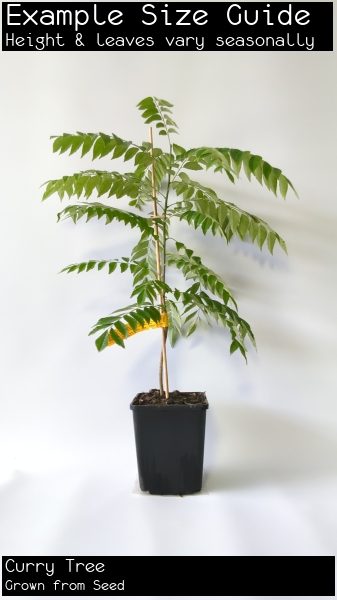
Curry Tree
$19.90 ($18.90-$79.00 choose a size)
Fresh leaves from this tree are an indispensable ingredient in Indian cooking. The leaves are pretty much unknown in the West because they lose most of their flavour when dried. They have a distinct, spicy curry-like flavour and odour.Warning: The seeds are poisonous and should not be eaten



Click Choose above to view Specials
Special
Pigeon Pea
$3.90 ($3.90-$18.90 choose a size)
A woody, fast growing leguminous shrub, to 5m, with yellow and red flowers. It is hardy, widely adaptable and tolerant of temperatures as high as 35C. It can be killed by heavy frost. The seeds are 25% protein, can be eaten fresh or as split dried peas, are used for dhal in India, contain 5 times more Vitamin A and C than green peas. The leaves and young shoots can be eaten cooked, they are fibrous and have a strong spicy odour. Animal Fodder; an excellent feed for cattle, pigs and poultry. Green Manure; incorporate the plants as they flower. Mulch production; can be cut many times in a season. Windbreaks; suitable as a shelter belt around vegetable gardens and plants provide nitrogen, habitat and soil stabilisation. Permaculture - plant on west side of newly planted trees to provide wind and sun shelter and a ready source of mulch. Prune back to control growth and use as mulch on your young tree.


Buy 16+ @$3.90ea usually:$4.90ea
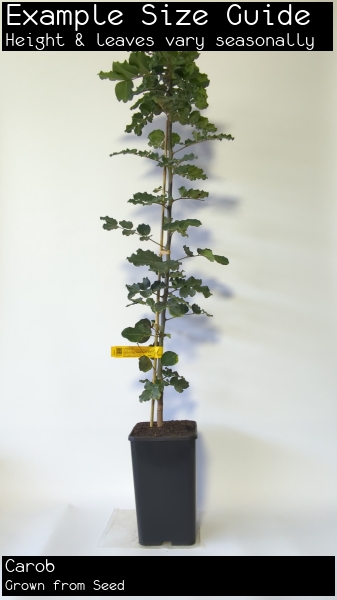
Carob
$17.90 ($17.90-$39.00 choose a size)
This elegant tree is often referred to as fake chocolate due to its similarities to cocoa in taste and texture. A Mediterranean tree, favouring arid conditions. Seedlings can be Male, Female, or bisexual. Prefers well drained soil.

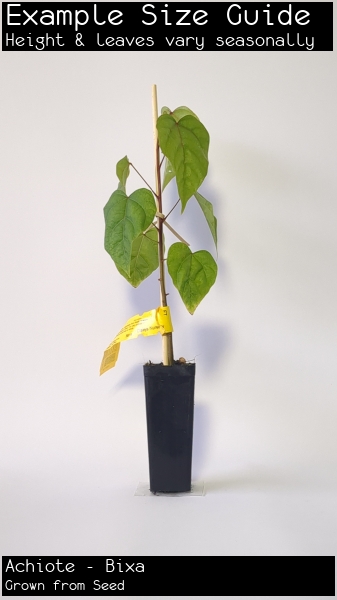
Achiote - Bixa
$17.75 ($4.95-$19.75 choose a size)
Also known as Annatto or the Lipstick tree, originates from South America and has spread in popularity to many parts of Asia. It is very popular in Philippine cooking. Grows and a dense small tree or shrub. The heart shaped fruits are brown or reddish brown at maturity, and are covered with short stiff hairs. When fully mature the fruits split open exposing the numerous dark red seeds. While the fruit itself is not edible, the orange-red pulp that covers the seed is used as a commercial food colouring and dye (similar to turmeric). The achiote dye is prepared by stirring the seeds in water, and is popular in South America and Asia to colour rice, desserts, butter, cheese, and many other foods. In the Philippine Islands the seeds are ground and used as a condiment. Tree is extremely beautiful in full flowering and fruiting. Can be grown in a container, prefers a frost-free climate.


Aramex Free Freight
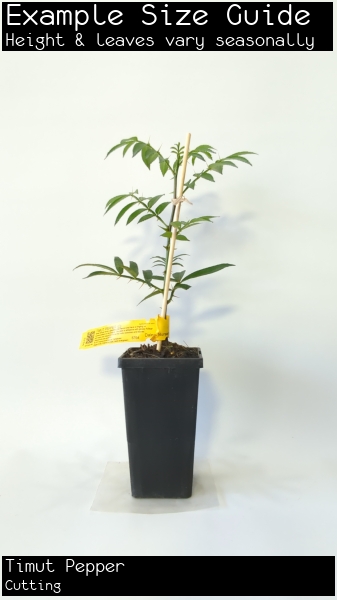
Timut Pepper
$39.00
Small berries have a grapefruit like flavour and have a tingling or numbing effect on the tongue. The plant is attractive with glossy foliage and stems but robust thorns on the trunk, branches and leaves Used in Nepali and Indian traditional medicine, the plant is also one of the sources of Sichuan pepper, though it is milder. This selection has both female and male flowers on the one plant. The plant makes an excellent pruned hedge fence. WEED WARNING: this plant has the potential to spread outside gardens and into bush and agricultural land. Harvest all fruit and net the pruned shrub to prevent bird spread.
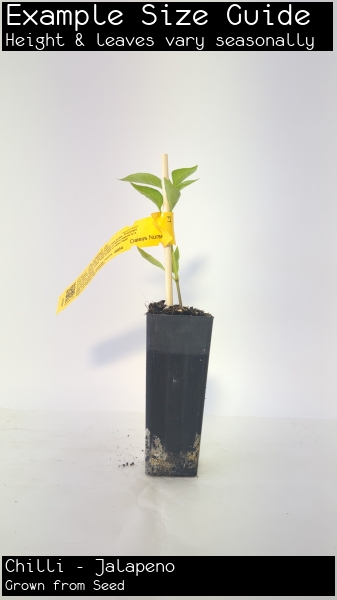
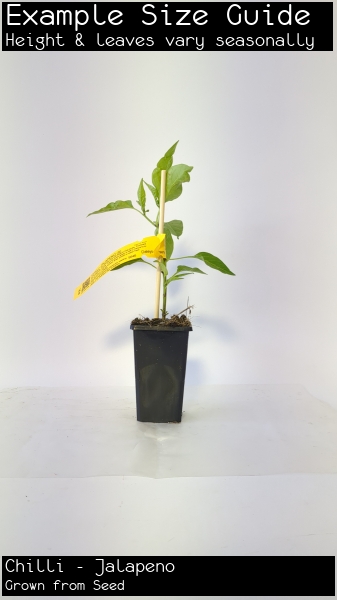
Chilli - Jalapeno
$4.90 ($4.90-$14.75 choose a size)
A high yielding, very popular chilli with medium heat levels. Prominent chilli in Mexican cuisine. It can be picked green or left to mature to a rich red colour. It can be cooked, dried, pickled or eaten fresh

Myoga Ginger
$19.90 ($18.75-$19.90 choose a size)
a native of Japan where it is grown commercially for its delicious spring shoots and young flower buds produced in autumn. Myoga flower buds are used in soups, tempura, pickled and as a spice. Like most gingers it is an understory of forests and so grows best under some shade. It can get sunburned leaves which will reduce its vigor if grown in full sun. In winter the top growth dies back and it regenerates in spring from the underground rhizomes.


Click Choose above to view Specials
Special
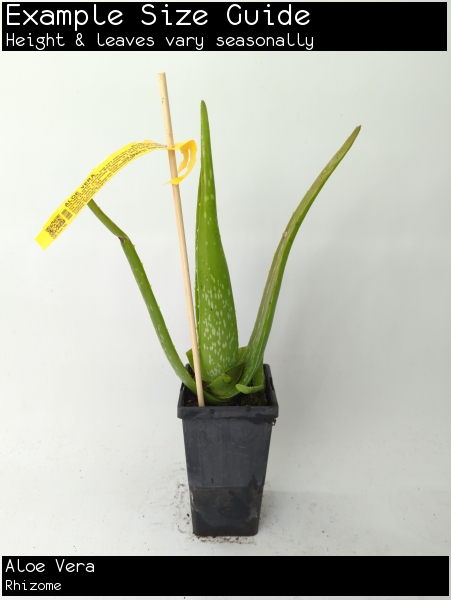
Aloe Vera
$12.75 ($12.75-$19.75 choose a size)
The healing powers of the Aloe Vera plant have been known throughout the civilised world for centuries. While considered by many to be a member of the cactus family it is actually a member of a family related to asparagus along with onion and garlic.It is a perennial herb with thick, succulent, pointed, basal leaves. The leaves are a grey-green to reddish colour and are sometimes spotted. The margins are slightly pink with pale teeth; flowers orange in terminal, elongated clusters.Currently known as Aloe barbadensis it is now agreed that Aloe vera can take precedence. That's much easier for us to remember and the vera distinguishes the more popular garden aloe from that of the A. maculata which is a much larger and more vigorous plant that has become naturalised in the eastern and southern parts of the continent.

Buy 3+ @$12.75ea usually:$18.75ea Aramex Free Freight
Special
Tea Plant
$17.90 ($4.90-$19.90 choose a size)
Makes an attractive hedge with the added bonus of providing your own tea if you wish to dry the new leaf tips. The fragrant white flowers are an added bonus to this compact glossy leaved bush.


Buy 2+ @$17.90ea usually:$19.90ea
Special
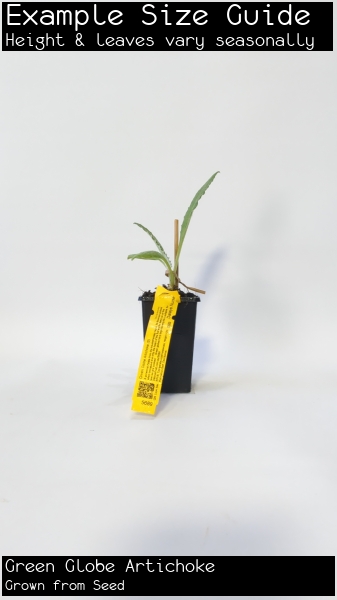
Green Globe Artichoke
$12.90 ($7.75-$14.90 choose a size)
A perennial thistle from the Mediterranean region, the flowers are picked when immature and only the heart of the bud and the fleshy base of the leaves are cooked. Green globes have large flowering heads, suitable for warm climates. They require a sunny position that is generously fertilized and make a striking and ornamental feature of the garden. Most common variety grown in Australia.

Buy 2+ @$12.90ea usually:$14.90ea
Special
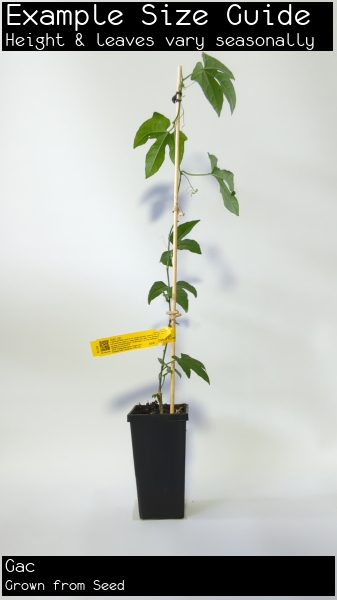
Gac
$24.00 ($24.00-$29.00 choose a size)
A perennial melon noted for its orange-red flesh, native to SE Asia. The aril around the seeds is a deep brilliant red, high in the carotenes lycopene and betacarotene. Traditionally, it is much esteemed as a superfood and is cooked in a variety of ways to enhance flavour. It can be made into both sweet and savoury dishes. Green fruits can also be cooked as a vegetable. Vines are either male or female so both are required for the plants to set fruit. Unusually, Gac vines may change between being male and female and may change from one season to the next. Hand pollinating allows for a better crop. They are a very vigorous vine and grow to 15m in any direction and require yearly pruning to suit the trellis built for it. In fact pruning the vegetative growth will increase fruit size. Suited to subtropical climates, but can be grown outside of this range with care. Will lose its leaves for the winter in a cool climate. In tropical areas its vigorous habit needs care.
Buy 3+ @$24.00ea usually:$29.00ea
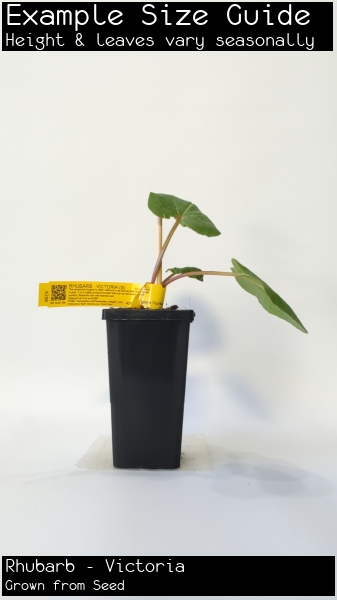
Rhubarb - Victoria
$12.90 ($12.90-$12.90 choose a size)
The perennial rhubarb is often referred to as the pie plant due to its use in pies. It is a highly productive plant that can be harvested within 6 months. Requires rich well drained soil.

Pandanus - Edible
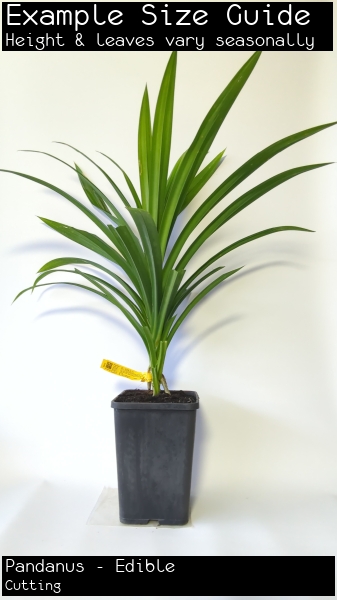
$37.00 ($24.90-$69.00 choose a size)
Widely cultivated for use in Asian cooking and basket making. It has a nutty fragrance and is most commonly used in rice dishes or tied in a bundle and cooked with food. Also useful in flower arrangements. A low growing plant to 1m with long narrow blade like leaves and woody aerial roots. In tropical climates it can be grown as a marginal plant in dams and ponds, used as a bedding plant in tropical landscaping. Outside of the tropics, well worth trying as indoor plant in winter with a warm, sunny aspect. Allow the plant to dry out over the winter months, but maintain humidity


Chilli - Bell
$12.75 ($12.75-$14.75 choose a size)
A very attractive bell shaped chilli which is medium to hot flavoured and excellent for pickling. Flavour of flesh is very mild and fresh and seeds carry the heat. Perennial in warmer climates.


Special
Comfrey
$12.90 ($9.75-$17.90 choose a size)
This well-known showy plant is a member of the Borage and Forget-me-not tribe, Boraginaceae. A hardy perennial, its large leaves are rough and hairy all over. Comfrey thrives in almost any soil or situation, but does best in moist conditions. A useful plant it can be used with great success as a liquid manure, activator for compost heaps, a weed barrier or attractive understory plant. This is a sterile, non seeding variant that in our experience only propagates via rhizome division and clumping.


Buy 4+ @$12.90ea usually:$17.90ea
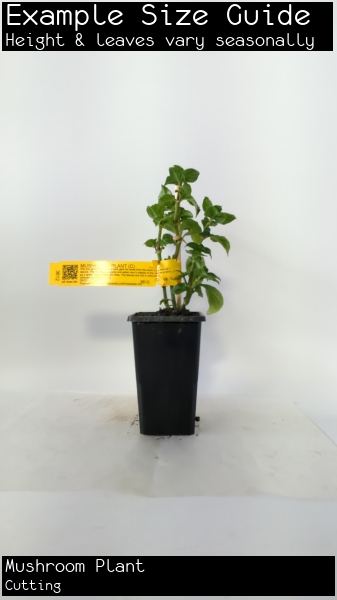
Mushroom Plant
$14.75 ($14.75-$18.75 choose a size)
This low growing perennial herb gets its name from the mushroomy flavoured leaves. The leaves and stems are eaten raw in salads or they can be cooked as a green vegetable in stir fries. The leaves are rich in chlorophyll. Leaves contain 3% protein, they are also very high in calcium, a richer source than most foods.

Click Choose above to view Specials
Gac - Female
$39.00
The Female Gac produces flowers for fruit production. A perennial melon noted for its orange-red flesh, native to SE Asia. The aril around the seeds is a deep brilliant red, high in the carotenes lycopene and betacarotene. Traditionally, it is much esteemed as a superfood and is cooked in a variety of ways to enhance flavour. It can be made into both sweet and savoury dishes. Green fruits can also be cooked as a vegetable. Vines are either male or female so both are required for the plants to set fruit. Hand pollinating produces larger fruit. Unusually, Gac vines may change between being male and female and may change from one season to the next. Hand pollinating allows for a better crop. They are a very vigorous vine and require yearly pruning to suit the trellis built for it. Suited to subtropical climates, but can be grown outside of this range with care. Will lose its leaves for the winter in a cool climate. In tropical areas its vigorous habit needs care.
Special
Turmeric - Black
$2.90 ($2.90-$24.00 choose a size)
Turmeric species with blue fleshed rhizomes growing to 1.8m with an attractive red stripe through the middle of the leaf. Rhizome is bitter and fibrous and colour can vary with growing conditions. Used for traditional medicinal purposes. Flowers are pink, arising from the base in summer. Native to northeast and central India
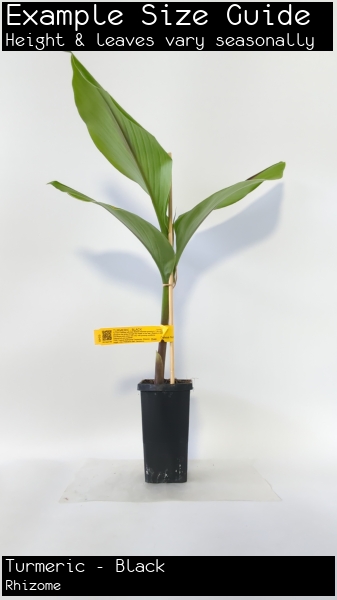
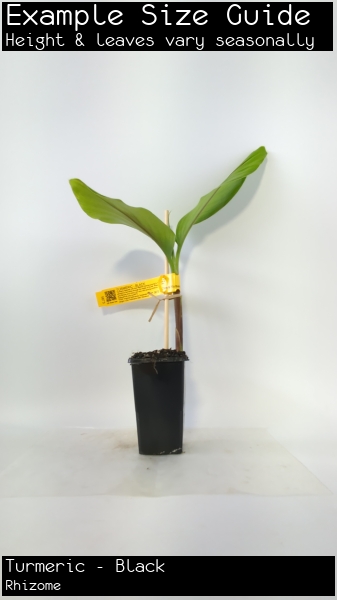
Buy 5+ @$2.90ea usually:$3.90ea
Special
Tomato - Marmande
$2.95 ($2.95-$3.95 choose a size)
Beautiful large fruited tomato with slight pleats. It is an old French variety with a with a taste that is such a true tomato taste. Good firmness and flavor perfect for small markets.
Buy 4+ @$2.95ea usually:$3.95ea
Special
Wild Rocket
$6.90 ($6.90-$9.75 choose a size)
A short lived perennial that has a sharp peppery flavour used mostly for salads and stirfry's. It is a very useful kitchen herb that will self sow and branch easily for a continual supply. It has a narrower, deeply lobed leaf shape compared to regular Rocket. Growing to 40cm in height, |a very useful kitchen herb that will self sow and branch easily for a continual supply.
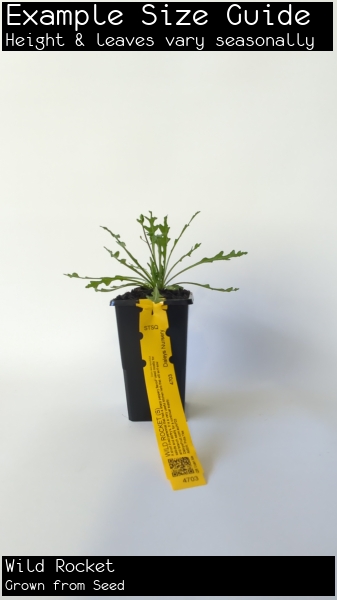
Buy 4+ @$6.90ea usually:$9.75ea
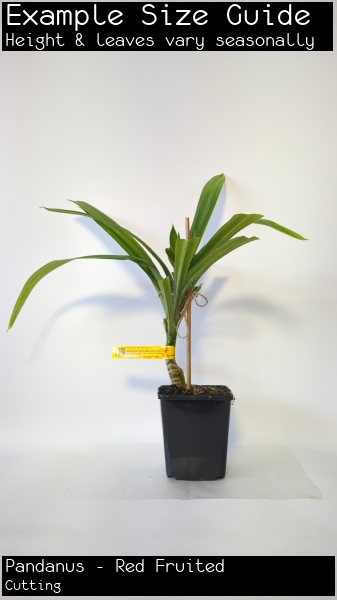
Pandanus - Red Fruited
$69.00
Large, red fruit from Papua New Guinea. Typical pandanus like plant with spiked edged leaves, with fruit resembling Jakfruit in appearance. Fruit are produced from 2-5 years of age on a small multi stemmed tree. Fruits are prepared by wrapping with banana leaves and baking in an earth oven. Also used to make a deep red oil for culinary purposes. High in beta carotene
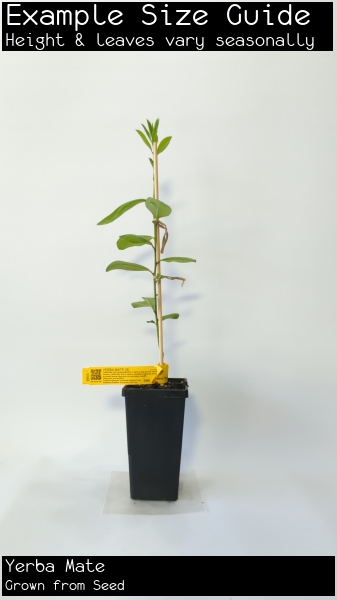
Yerba Mate
$24.00
Yerba Mate (Ilex paraguariensis) is a hardy evergreen tree native to South America, traditionally used to make a stimulating herbal tea renowned for its smooth energy boost and rich antioxidant content.This attractive tree features glossy green leaves and a dense growth habit, making it a great addition to subtropical and mild temperate gardens. The leaves are harvested, dried, and steeped to make Yerba Mate tea, a cultural staple in countries like Argentina, Brazil, and Paraguay.Care Tips: Yerba Mate thrives in humid conditions and benefits from protection from frost when young. Plant in a sheltered position and mulch well to retain soil moisture. It can take 3 to 5 years to begin producing harvestable leaves.
Snake Jasmine
$14.90 ($14.90-$18.75 choose a size)
An erect, multi-branching shrub to 2m. It is commonly cultivated for its medicinal properties, as a hedge plant to protect against soil erosion. It is also planted as an ornamental. It thrives best on moist, well-drained soils, but it is also found in much drier habitats such as rock crevices. Succeeds in full sun or partial shade. Prefers a moist, well-drained soil[


Click Choose above to view Specials
Special
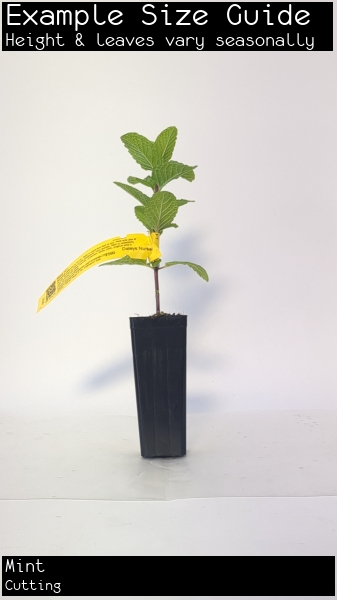
Mint
$5.75 ($5.75-$7.75 choose a size)
Spreading perennial to 45 cm. Best in separate bed or pot. Pick and use at the last moment as mint aroma dissipates very quickly. Mint is commonly used combined with lamb, carrots, potatoes, peas, pork, yoghurt and in desserts, drinks and herbal teas.
Buy 2+ @$5.75ea usually:$7.75ea
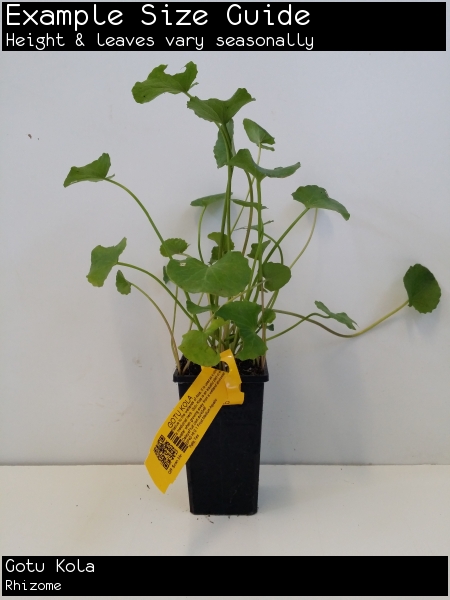
Gotu Kola
$7.90
Gotu Kola is native to the wetlands of Asia, and now endemic to the South Pacific and Australia. It is used as a culinary vegetable. Gotu Kola is an aquatic plant so for best results regular water is required when growing away from a wetland environment. In gardens it can be quite hardy though but will then produce small and bitter leaves.
Special
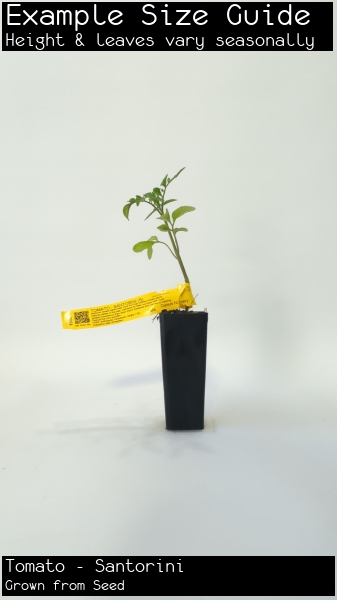
Tomato - Santorini
$2.90 ($2.90-$4.90 choose a size)
Santorini tomato plants bear more fruit than ordinary tomato plants, matures earlier in the year, maintains its deep red colour with much greater consistency than other cherry tomatoes and requires no watering, an important attribute for Aegean islands, where water is often in short supply. And, of course, it tastes like a real tomato, unlike all those coloured cardboard varieties you find on the market.The island of Santorini is rightly renowned for its dramatic setting. Volcanic flows and scatterings of ash mark the countryside with their strange shapes and intensity of colours while the steep walls of the caldera, hundreds of feet high, are dotted with white villages that perch over the calm blue waters of the Aegean. Less known are some of the agricultural products of the island, most of which seem to be associated one way or another with the volcanic soil. One of these is the diminutive waterless tomato. Although it is often called cherry tomato, the Santorini fruit actually belongs to a different species, and it comes in two varieties. There is the so-called authentic type, where the rounded sides of the tomato are fluted vertically, giving the impression of a segmented fruit, and there is the type that does not have any flutings. Both varieties are smaller than ordinary tomatoes, but somewhat larger than the real cherry tomatoes.As if these benefits were not enough, scientific analysis has revealed the Santorini product bears yet more advantages over the larger and more prevalent kind of tomato (designated the GS67). Tested at two different stages of maturity, the islands variety has been found to have more ascorbic acid (another name for Vitamin C) and more soluble phenols. It has also been shown to contain the largest amount of lycopene in any known fruit or vegetable.
Buy 4+ @$2.90ea usually:$4.90ea
Special
Perennial Buckwheat
$14.90 ($14.90-$20.90 choose a size)
Vigorous ground cover producing edible greens and seeds, consumed raw or cooked. Seeds can be used to make a flour. Flowers are fragrant and bee attracting. Useful as a quick groundcover and forage herb for animals. Flavour of leaves is slightly bitter but nutritious. Medicinally used in traditional Asian cultures. Good for erosion control. Weed warning: vigorous and spreading, enjoying moist areas. Keep away from creeks as it may become invasive and smother native plants.
Buy 4+ @$14.90ea usually:$20.90ea Aramex Free Freight
Mother of Herbs
$14.90
A perennial aromatic, culinary herb that can be used as a replacement for 'mixed herbs' in various dishes. Super easy to grow, prefers a part shade position and requires minimal watering to flourish. An excellent addition to every herb garden

Parsley Italian
$3.90
Flat-leaved parsley is preferred by some as it easier to cultivate, being more tolerant of both rain and sunshine and has a stronger flavour. Freshly chopped green parsley is used as a topping for soups, salads and as a flavouring for many dishes. In the garden parsley is attractive to beneficial insects.

Special
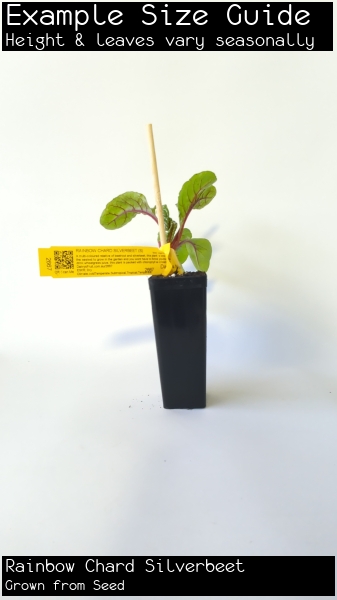
Rainbow Chard Silverbeet
$2.95 ($2.95-$4.90 choose a size)
A multi-coloured relative of beetroot and silverbeet, this plant is one of the easiest to grow in the garden and you wont have to force yourself to drink wheatgrass juice, this plant is packed with chlorophyll and loads of vitamins and minerals.Very easy to grow only some caterpillar, snail and potential Beet leaf miner. Rainbow chard is a delicious vegetable. Make sure to eat the coloured stems which are considered a delicacy in part of Europe, not just the leaves. The young leaves can be eaten raw in salads. Older leaves are sweetened up with some steaming, which, if you eat a lot of it, is important to destroy the oxalic acid.
Buy 4+ @$2.95ea usually:$4.90ea
Special
Vietnamese Mint
$4.50 ($4.50-$9.90 choose a size)
This herb is not a member of the mint family despite the familiar appearance and scent. Commonly eaten fresh in salads, soups and stews. A perennial plant that grows best in tropical and subtropical where it likes a moist position.

Buy 4+ @$4.50ea usually:$5.75ea
Special
Lemon Balm
$5.90 ($5.90-$7.75 choose a size)
Lemon balm is a pretty plant that prefers rich moist soil and partial shade. It can tolerate direct sunlight but plants grown in shade tend to be larger and more succulent. It is related to mint in appearance, but it is not as invasive and easier to control. A clump-forming herbaceous perennial with heart shaped, deeply veined leaves that are covered with stiff hairs. Chopped fresh leaves can be used to add zest to sweet or tangy dishes. It combines well with allspice, bay leaves, mint, pepper, rosemary and thyme. A wonderful addition to fruit salads, green salads, herb butters, fruit drinks, sorbets. It can also be used in egg dishes, custards, soups and casseroles. It works well in stuffings for poultry,lamb or pork. Its subtle flavour is a perfect for sauces and marinades for fish.

Buy 4+ @$5.90ea usually:$7.75ea
Special
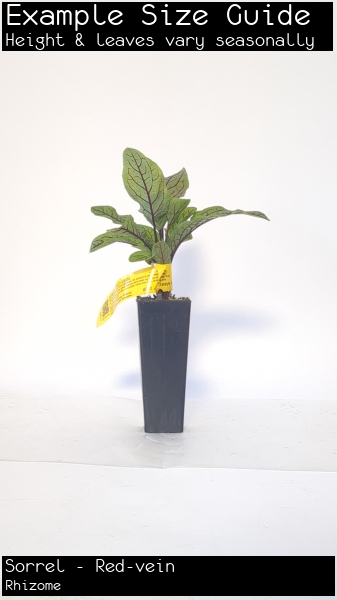
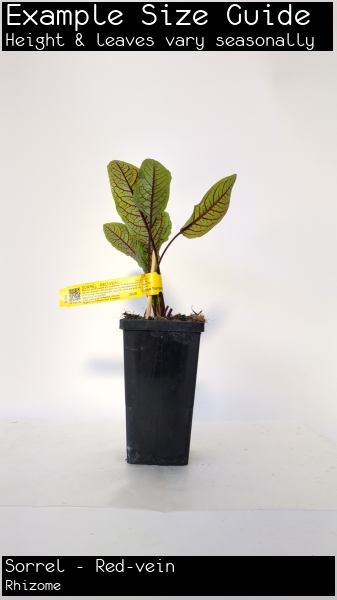
Sorrel - Red-vein
$2.95 ($2.95-$12.90 choose a size)
Red-vein sorrel is edible and ornamental. An attractive perennial it has the look of spinach, with the green leaves described as lance shaped, from 5-14 cm long. The characteristic red-purple veins are quite striking and may be more prominent in the summer months. This colouring also gives the red sorrel the names bloody sorrel, bloody dock or red veined dock. The plant itself spreads, with a rosette like base creating a clump of leaves above the taproot. The tall spikes of tiny, greenish flowers appear in summer. Small, brown fruits, containing seeds, appear after flowering. The young leaves of sorrel can be used sparingly in salads, the presence of oxalic acid means it should not be eaten in large amounts. Sorrel may be used for sauces and soups, salads and omelettes.
Buy 4+ @$2.95ea usually:$4.90ea
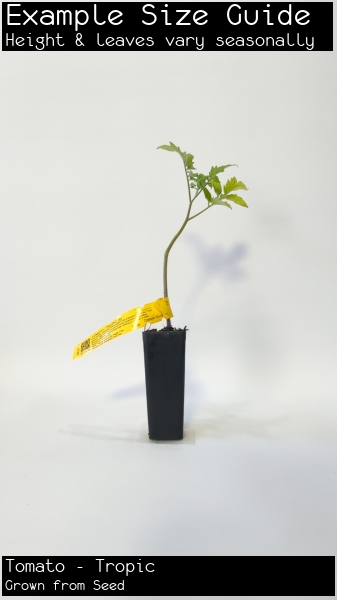
Tomato - Tropic
$4.90
Want healthy, productive tomato plants in the subtropics? Grow the Tropic selection. High tolerance for hot and humid conditions with excellent disease resistance. Indeterminate type, climbing to 1.5m tall on trellis. Flavour is rich and sweet, colour is red with a slightly green top, size to 250g
Jade Vine
$34.95 ($34.95-$39.00 choose a size)
Prized for its stunning claw shaped turquoise flowers. These can be eaten as a vegetable. This is a vine for subtropical, tropical gardens or a warm indoors position. It does not tolerate frost. It prefers a moist, free draining soil and can grow 2-5m.


Aramex Free Freight
Curry Plant
$19.75 ($18.75-$19.75 choose a size)
The young shoots and leaves are stewed in Mediterranean meat, fish or vegetable dishes until they have imparted their flavour, and removed before serving. It grows on dry, rocky or sandy ground around the Mediterranean region. The stems are woody at the base and can reach 60cm or more in height. The clusters of yellow flowers are produced in Summer, they retain their colour after picking and are used in dried flower arrangements.


Click Choose above to view Specials
Butterfly Pea Vine
$18.75
Vivid, deep blue flowers on a vigorous vine with pods that are edible when young. Ornamental and edible, the flower is used as a food colouring, in meals and as a tea. The striking blue can be modified with the addition of other ingredients, and can be used hot or cold. As a legume it fixes nitrogen from the atmosphere where it grows. It is native to Indonesia,

Aramex Free Freight
Special
Rosemary
$12.90 ($12.90-$18.75 choose a size)
A woody perennial herb with aromatic fragrant needle like leaves, native to the Mediterranean region. Rosemary is a member of the mint family, the name rosemary comes from the Latin rosmarinus, meaning dew of the sea, apparently because they are often found growing by the sea.


Buy 2+ @$12.90ea usually:$14.90ea
Special
Hibiscus - Cranberry
$9.90
A very nutritious vegetable. The young leaves have a pleasantly tart flavour, and eaten either raw or cooked, they retain their colour. The leaves contain oxalic acid, and should only be eaten once a week. Unlike Aibika, it is not particularly mucilaginous. Flowers are used to make teas or other drinks where they contribute colour rather than taste. In Central America the flowers are combined with ice, sugar, lemon, or lime juice and water to make a purple lemonade.This plant is a short-lived perennial shrub in the subtropics and tropics but can be grown as an annual in cooler climates. It grows rapidly to 1.7 m high with deeply cut leaves similar to Japanese maple. The leaf colour of deep cranberry red is highly ornamental; the flowers are a small, very pretty, rose-pink hibiscus-type. Cranberry hibiscus is a hardy plant that thrives when it is warm and wet; it prefers full sun but will grow in partial shade. It needs ample water, rich, fertile, well-drained soil that is kept mulched and a pH of between 6.1 and 6.5.The vivid leaf colour makes this a good choice as a background plant in ornamental beds.

Buy 1+ @$9.90ea usually:$16.90ea
Lemongrass
$18.75 ($14.90-$18.75 choose a size)
Lemongrass is one of the most versatile of herbs. It makes a delicious herbal tea, is often used in cooking, as an effective pest repellent and an almost impenetrable weed barrier. Tie the outer leaves in a loop and cook with food to impart flavour. Be sure to remove before serving. Incredibly fast to become established and drought tolerant. The fleshy, purple part of the stem is used in curry pastes and can be ground into a paste and added to marinades and sauces to impart a fresh, lemony flavour.


Aramex Free Freight
Special
Coriander
$2.75 ($2.75-$3.90 choose a size)
Frost hardy annual to 50 cm high x 30 cm wide. Prune off all flower stems to produce more leaves. Use all parts - leaves, stems and roots. Seeds can be ground and used in curry.Dainty white flowers attract beneficial predators (ladybirds, lacewings) into the garden.

Buy 4+ @$2.75ea usually:$3.90ea
Special
Jiaogulan
$14.75 ($3.90-$19.75 choose a size)
A climbing vine native to China and south east Asia. Grow as an annual and harvest in the summer. The name Jiaogulan is Chinese for twisting vine orchid. The leaves are edible and can be used as a vegetable or in teas, where they have a slightly bittersweet flavour. Plants are dioecious, meaning they are either male or female and one of each will be required for seed set. It is recommended to buy 3 to increase chances of a female if you would like to collect seed/fruit
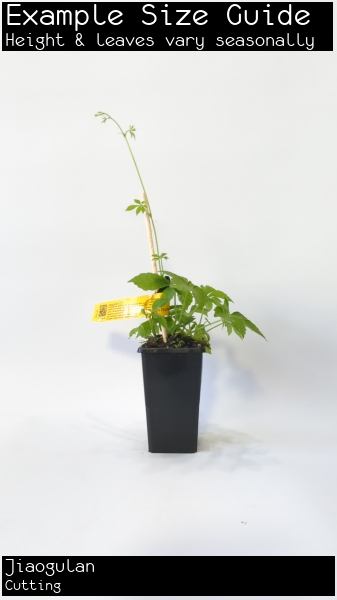
Buy 3+ @$14.75ea usually:$19.75ea Aramex Free Freight
Special
Ginger - Spiral 'Belize'
$19.00
Beautiful landscaping ginger with yellow inflorescence from which emerges the red edible flower. Crisp, tangy and tasty, they make a great addition to salads of all kinds. Prefers lightly shaded, moist areas but can tolerate sun and some dry times. Relatively cold hardy, dies back over winter in cooler areas. Reaches about 1m and can tolerate a range of soils and climates.
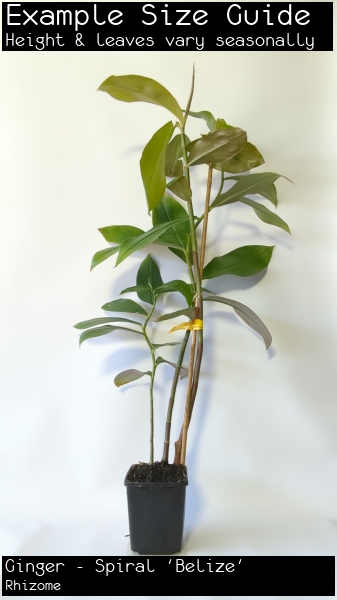
Buy 1+ @$19.00ea usually:$28.90ea
Special
Brahmi
$5.95 ($5.95-$7.75 choose a size)
Brahmi is native to India and is now endemic to many parts of the world, including Australia and prefers warm, wet soils in a protected, partially shaded position. Drought and frost tender. Perennial ground cover growing to 20-40cm. Eat fresh, or dry and brew into a herbal tea. Also called memory herb and water hyssop.

Buy 4+ @$5.95ea usually:$7.75ea
Sugar Cane - Purple
$23.90
An attractive clumping cane grown for its ornamental burgundy stems. It has sterile flowers and does not set seed. The old cane can be sawed into slices and chewed on, the juice is sweet and delicious. The tall purple fronds are a nice addition to food forest style gardens

Special
Sage
$5.75 ($4.90-$7.75 choose a size)
A small, perennial, evergreen with woody stems, grayish leaves, and blue to purplish flowers. Native to the Mediterranean region. It has a long history of medicinal and culinary use, and in modern times as an ornamental garden plant. As a kitchen herb, sage has a slight peppery flavor.

Buy 2+ @$5.75ea usually:$7.75ea
Tahitian Spinach
$17.90 ($17.90-$17.90 choose a size)
This particular Taro was developed for its yield of edible leaves and stems rather than its roots. The leaves and leaf stems are eaten as a cooked, green vegetable. This plant has a Weed Warning. Weed Warning: Tahitian Spinach is prone to producing a multitude of small bulbils that, if disturbed, can spread rapidly. It tends to be hard to clear out of an area because of the sheer numbers of these small bulbils. So it is best planted off in a corner or in a large pot, where it can be left undisturbed. The stems are widely used as a celery substitute in tropical areas. They provide protein, calcium, phosphorus, iron, potassium and vitamins A, B, and C. The leaves can be harvested all year round. No Taro should ever be eaten raw, due to the presence of harmful oxalates, which are eliminated with cooking.
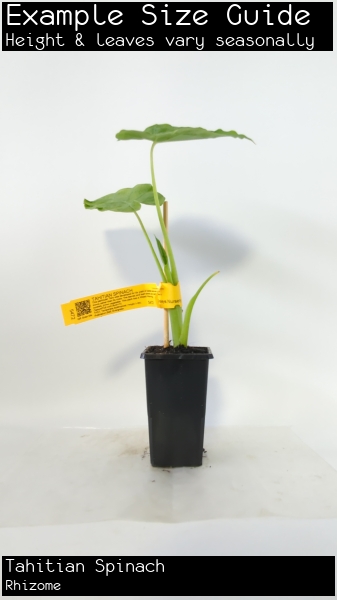

Aramex Free Freight
Turmeric - Orange
$3.90 ($3.90-$19.90 choose a size)
The thick, cylindrical rhizome or underground stem of a tropical plant belongs to the ginger family. Finely grated it adds many health benefits and a brilliant colour and earthy flavour to foods such as Indian curries, rice and vegetarian dishes. Fresh Turmeric is lightly aromatic and slightly peppery, the flavour is pungent and bitter. Turmeric is a primary ingredient of Curry Powder. Used heavily in Indian Cuisine such as legumes, beans, and vegetable dishes. That wonderful ballpark mustard also contains turmeric as a colouring. To make yellow rice, use one teaspoon to colour one cup of raw rice. In the garden, the luscious leafy plant produces a spectacular flower that will stop you in your tracks, making a great ornamental feature in a subtropical garden. The foliage will die back in the winter indicating it is ready for harvest.


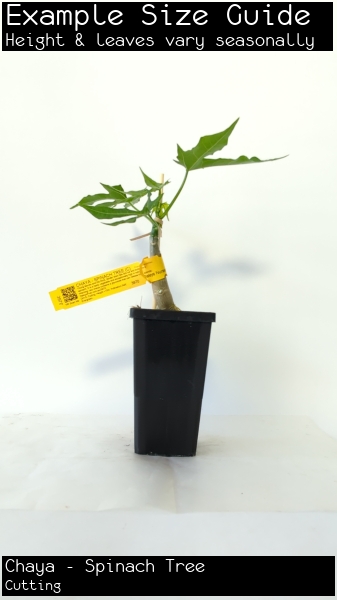
Chaya - Spinach Tree
$24.00
Young leaves and the thick, tender stem tips are cut and boiled as a spinach. It is a tasty vegetable and exceptionally high in nutrient. Warning: raw chaya contains a glycoside that can release toxic cyanide. Cooking is essential prior to consumption to inactivate the toxic components and must be cooked before being eaten. Traditionally leaves are immersed and simmered for 20 minutes and then served with seasoning, oil or butter. Cooking for 20 minutes in an open topped vessel will render the leaves safe to eat. Chaya leaves can be harvested continuously as long as no more than 50% of the leaves are removed from the plant, which guarantees healthy new plant growth. They contain exceptionally high levels of protein, and also calcium, iron, and vitamin ACaution: Toxic unless simmered for at least 20 minutes.
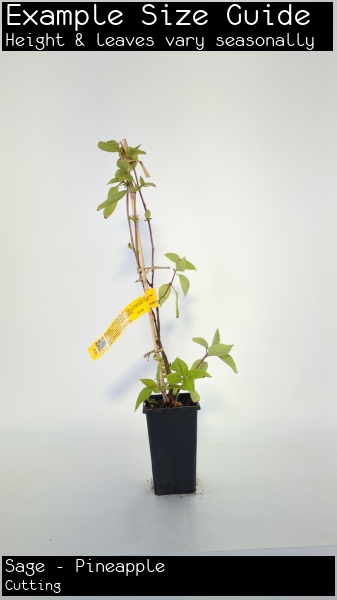
Sage - Pineapple
$7.90
Scarlet flowers and a pineapple aroma make this delightful grey-green sage a lovely addition to the herb garden. A herbaceous perennial it grows 1.2-1.5m tall. Attractive to birds and butterflies.
Special
Kangkong ( Water Spinach )
$5.90 ($5.90-$7.90 choose a size)
The leaves and stem are soft and edible. The stem is hollow, green and purple in colour while the flowers are white and purple in the centre. The leaves are heart shaped and the seeds are dark brown.

Buy 4+ @$5.90ea usually:$7.90ea
Special
Thyme
$5.90 ($5.90-$7.90 choose a size)
Holds its strong savoury flavour well - add at beginning of cooking. Thyme is the perfect plant for garden edges when it can be walked on to scent pathways and simply harvested. Sore throats benefit from a thyme gargle which is strongly antiseptic.

Buy 2+ @$5.90ea usually:$7.90ea
Special
Mushroom - Blue Oyster Grow Kit
$35.00
Amazing blue colour, the oyster mushroom is frequently used in Japanese, Korean and Chinese cookery as a delicacy: it is served on its own, in soups, stuffed, or in stir-fry recipes with soy sauce. Oyster mushrooms are sometimes made into a sauce, used in Asian cooking, which is similar to oyster sauce. The mushroom's taste has been described as a mild with a slight odor similar to anise. The oyster mushroom is best when picked young. Steel blue colored fruit bodies especially when young. Best Temperature Range : Cool Climate: 10-21 C fruiting temperature

Buy 1+ @$35.00ea usually:$39.00ea
Special
Sweet Marjoram
$3.95 ($3.95-$6.75 choose a size)
A perennial herb with sweet pine and citrus flavours. Marjoram is indigenous to the Mediterranean area and was known to the Greeks and Romans as a symbol of happiness. Marjoram has a more mild and sweet flavour than oregano.

Buy 4+ @$3.95ea usually:$6.75ea
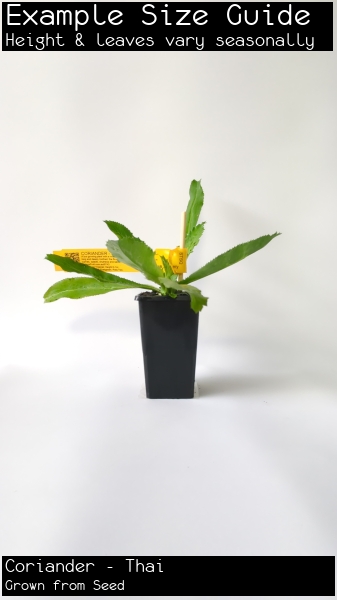
Coriander - Thai
$9.50 ($4.90-$9.50 choose a size)
A low growing plant with a rosette growth habit. The leaves are stiff, long and deeply toothed: the flowers are spiky. The leaves are used in curries, salads, chutneys and salsa. It has a stronger flavour than coriander and retains its flavour when dried. It grows well in pots. #herbs

Cardamon Ginger
$17.90
Cardamon ginger is a leafy ginger-like plant that grows in clumps and makes an excellent low screen, it adds a tropical feel to any garden. While the seeds don't resemble true cardamom, the leaves can be used in desserts, to add flavour when steaming rice, or used to wrap fish. Leaves are also delicious when infused to make spiced teas: infuse one cardamon leaf, two sticks of lemon grass and one chopped chilli for a winter warmer.

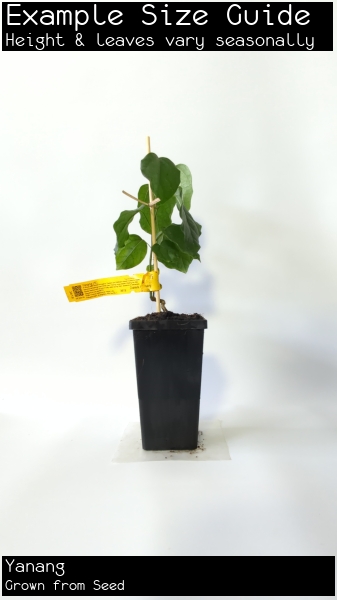
Yanang
$27.00
A vinous plant found throughout Thailand and Vietnam where it used to make teas and refreshing iced drinks (Nam Yanang) soup bases (Kaeng No Mai, Samlar Machu) and a type of Jelly called Suong Sam. Essence is extracted simply by rubbing the leaves together in water until this turns deep green. Superior flavor and processing time than Mesona Chinensis, which is a plant in the mint family used to make Grass Jelly. Delicate when young, the plant should be encourage up supported wires in part shade to some full sun. The plant is dioecious, meaning either male or female, but its not necessary to have more than one as the primary part for harvest is the leaf.
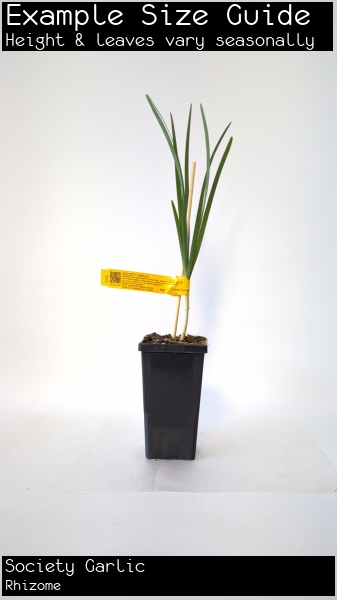
Society Garlic
$15.90 ($4.90-$15.90 choose a size)
The leaves are used chopped in sauces, soups, salads and as a garnish. The flower buds steeped in vinegar give it a mild garlic flavour and can also be used as a garnish. It is an attractive edging plant for herb and vegetable gardens, the cut flowers last well in water and are also edible, adding a spicy bite to salads.
Sugar Herb - Stevia
$18.75 ($17.75-$18.75 choose a size)
Stevia or the sugar herb is native to Brazil. The fresh or dried leaves can be used as a sugar substitute to sweeten cakes, drinks or desserts and are the only natural sweetener to have zero calories, carbohydrates and a zero glycemic index. The leaves if eaten fresh have a distinct set of flavours, the first sensation on the taste buds is the sweetness, this is followed by a pleasant aniseed like flavour which is lost totally once the herb is dried. Stevia is best grown in a sunny or partly shaded position where it is protected from frost. Thrives in moist, well drained soils enriched with humus. Ideal for pots, herb and kitchen gardens.The flowers will emerge from the ends of the stems throughout summer, and it does die back in winter but the plant is perennial and will bounce back in spring. The foliage is delicate on these young herbs, and our potted plants are known for their older, lower leaves to turn yellow and drop during transport to conserve energy. This is not a problem long term. With care and acclimatisation they will bounce back.


Aramex Free Freight
Special
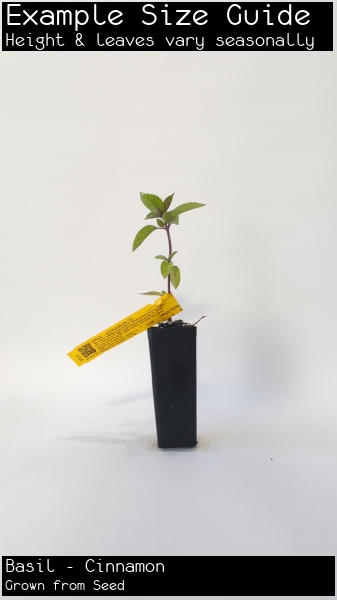
Basil - Cinnamon
$2.45 ($2.45-$3.95 choose a size)
Has a spicy, fragrant aroma and flavor. Cinnamon basil is an easy-to-grow herb. It requires six to eight hours of bright sunlight per day. Cinnamon basil has somewhat narrow, slightly serrated, dark green, shiny leaves with reddish-purple veins, which can resemble certain types of mint, and produces small, pink flowers. Cinnamon basil is used in teas and baked goods such as cookies and pies. It is also used in pastas, salads, jellies, and vinegar.
Buy 4+ @$2.45ea usually:$3.95ea
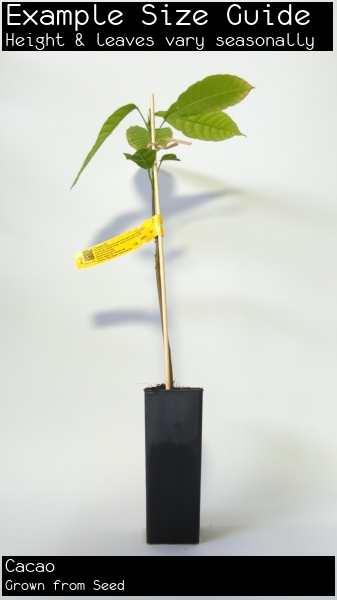
Cacao
$34.00 ($34.00-$69.00 choose a size)
The cacao is a tropical tree native to the Amazon region of South America. It grows well in tropical Australia. Cacao is the source of chocolate, cocoa and cocoa butter, the fermented seeds are roasted, cracked and ground into a powder. Benefits from hand pollination.

Arrowroot - West Indian
$19.90
True Arrowroot, a tropical plant with rhizomatous tubers that are the source of the well known flour. Can be eaten raw or cooked but the flesh is fibrous. The flour starch is extracted from the pulped tuber, which is mixed with water and sieved. The resulting starchy water is evaporated and the fine starchy powder remains. Native to tropical Central and South America it does better in frost free areas, growing to about 1.2m. The rhizomes are ready to harvest when 10-12 months old, the stems yellow and fall over in winter and return in late spring. Grow in full sun or part shade with good moisture. Ornamental, lending a tropical ginger look to gardens. Suitable for growing in pots or in Food Forest systems

Walking Onion
$19.75 ($18.75-$19.75 choose a size)
The easiest to grow of all onions, these onions are also known as Egyptian and top-setting onions. They grow in any soil with reasonable drainage, but if you want big fat bulbs then dig in compost and horse, cow or sheep manure a few weeks before planting. Grow from bulbs planted with just the top poking out of the soil, or from single bulbils planted just under the surface of the soil, in a position with full sun. Space plants about 40cm apart and they will grow to be about 60cm tall. Bulbs can be dug up about 5 months after planting. Save some bulbs for replanting or just replant the bulbils and eat the bulbs. There seems to be some variation in flavour of the bulbs, some being more mild and sweet and others stronger. There are also types with more red than brown skins. Both bulbs and bulbils have similar onion flavours and make an excellent substitute for brown onions in any dish.


Bay Tree
$19.75 ($14.90-$79.00 choose a size)
This handsome pyramid shaped tree makes a superb tub specimen, hedging plant or topiary sculpture due to its positive response to pruning. The leaves of the bay are used as a popular culinary seasoning used in all types of cooking.

Cardamom
$39.00 ($27.00-$39.00 choose a size)
A pungent, aromatic, herbaceous perennial. The green three sides seed pods are popular in Indian and Asian cooking and can be used whole or ground into a spice.The flowers are white to lilac or pale violet, produced in a loose spike 30 to 60 cm long.

Chilli - Birds Eye
$12.75 ($4.90-$14.75 choose a size)
The fruits are red, yellow, purple or black. Pungent, hot and spicy. The flowers are greenish white or yellowish white. Can be called the Thai Chilli as well. The plant can grow up to 2m tall however very easily stays small especially in pots. It's origins are from Mexico however it is most famous for being used in Vietnamese cooking in soups, stir fries and salads. Thai cuisine commonly uses this chilli and it is because it has a fruity taste and an extreme spiciness. Many of the Thai curries are centred around the flavour of the Birds Eye chilli and it has become so common in Thai cooking that it is often just called the Thai chilli. Because they go well in pots many people who couldn't grow these fruits outside in colder climates can keep them protected and enjoy them fresh rather than store bought.

Betel Leaf
$19.90 ($14.75-$19.90 choose a size)
The spicy leaves can be eaten raw and cooked. The attractive leaves can be used to wrap tasty foods such as spiced rice and ginger. Requires free draining, moist, fertile soil to grow well. Trellis support advised. Or it can be grown as a dense ground cover. Soaking the leaves in cold water with a little sugar for 2 hours before use subtly alters the flavour. The white flower spikes develop into a small fruit that can be eaten. Betel leaf has many traditional medicinal uses.Betel leaf is an evergreen, perennial creeper to 90 cm. It has shiny heart-shaped leaves with small white flower spikes. It prefers a rich, well-drained soil with partial shade. It likes to be kept moist but does not tolerate water-logging. Frost will damage the leaves but not kill the plant once it is well established. It makes a good ground cover under trees in subtropical and tropical areas. It grows vigorously in the right position and because of its habit of suckering can be difficult to remove. It can be grown successfully in colder areas in a hanging basket or large pot and moved to a warm, sheltered position in winter. Betel leaf is a different plant to Betel pepper Piper betle, which is chewed with betel nut.


Special
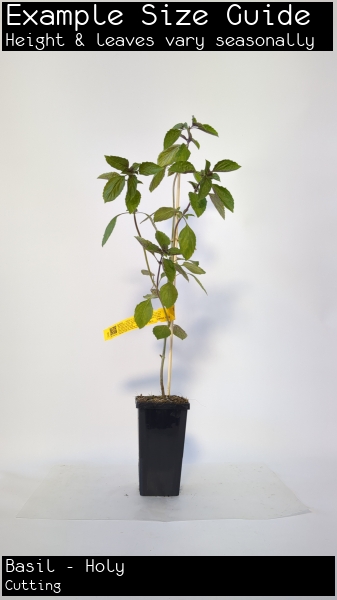
Basil - Holy
$14.90 ($7.75-$14.90 choose a size)
Slender green leaves, hairy purplish stem, musky and slightly mint scent, often grown in houses, gardens and near temples in India, said to be a tonic aiding digestion, use in salads. Varieties may be green or purple tinged
Click Choose above to view Specials
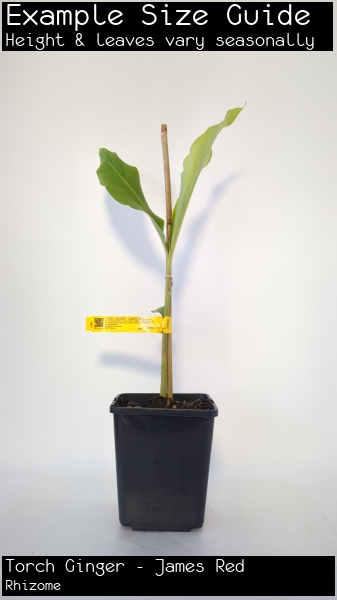
Torch Ginger - James Red
$49.00
Add an exceptional flavour to your culinary creations. Edible flower buds, this has large flower spikes and is a stunning addition to tropical and subtropical gardens.A very large ginger that in optimum conditions can reach 2-5m in height.
Chilli - Red Cayenne
$12.75
A hot chilli which has a pungent taste. Red Cayenne chillies are ideal in Asian dishes and can be used for pickling. Chillies are long capsicum like up to 100mm turning red on full maturity. Scoville heat scale 30,000 - 50,000 units

Special
Lemongrass - East Indian
$9.90 ($9.90-$18.75 choose a size)
Aromatic, tall, clump forming lemon scented grass, native to east India. It is a source of the essential oil for perfumery, culinary and medicinal purposes. It likes high rainfall and warm temperatures, and is not frost tolerant. It is more tropical than its cousin Cymbopogon citratus, with thicker, tougher leaves also. In agroforestry, it is well suited as a living mulch and can be cut regularly in the growing season. Vigorous, it can help contain running weeds from spreading when planted as a border. This plant does produce viable seed, so take care that this does not spread into native bushland or pasture


Buy 4+ @$9.90ea usually:$14.90ea
Special
Capsicum - Perennial
$7.95 ($7.95-$9.75 choose a size)
Hardy, short-lived perennial capsicum, growing to 2m. Flesh is bright red, thin and sweet . Fruit are very resistant to disease, producing abundant crops for months through late spring, summer and autumn. Dies back during winter in cooler sub tropical areas, but returns vigorously in spring with care. Can be pruned to 1m.

Buy 2+ @$7.95ea usually:$9.75ea
Special
Chilli - Cheongyang Gochu
$9.75 ($9.75-$14.75 choose a size)
A Korean variety of chilli for adding to most dishes where you enjoy some mild heat or spiciness. A well known ingredient in the production of fermented foods such as Kim Chi. Ripens to red providing the colour of a typical Kim Chi. This is a long, skinny type chilli and tastes similar to birds eye with a little more flavour and heat. Excellent for pots or in the ground. A highly productive chilli variety.

Buy 2+ @$9.75ea usually:$14.75ea
Special
Mint - Chocolate
$5.75 ($4.90-$7.75 choose a size)
Chocolate Mint is a medium growing mint reaching up to 60cm tall, with a spreading nature up to 60cm. The large ovate leaves are a dark bronze-green, with deep reddish-purple stems. The lilac-purple flowers appear in summer and open from the bottom of the false whorl, progressing to the top of the inflorescence. The aroma and flavour are open to interpretation. Some people describe the taste as like peppermint with chocolate undertones, while others cannot detect the chocolate flavour at all. The parent plant is Peppermint, so this is the main flavour with the chocolate being a novelty. Nibbling the leaves is a sure way to find out whether your palate can detect the subtle difference.

Buy 2+ @$5.75ea usually:$7.75ea
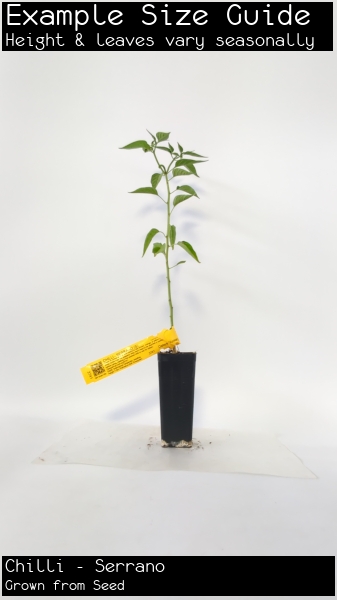
Chilli - Serrano
$12.75 ($4.90-$12.90 choose a size)
Green in colour at first, and ripens to red, brown, orange, or yellow. 5 times hotter than the jalapeno, they don't need to be steamed or peeled before using, making it the easiest chilli to use for salsas.
Seed of Heaven
$24.00
A tropical evergreen, clump-forming, spice and fruit bearing, giant ginger native to West Central Africa. Growing to 6m or more, the rhizomes are reddish-brown, 1.5 cm in diameter. The large, ridged bright red, fleshy fruit are produced at the base of the plant and contain a sweet edible pulp that is tangy and juicy. The seeds are used as a piquant spice, not unlike peppercorns. Grows best in a shaded position. Tolerant of seasonally dry conditions and a part sun position if needed.

Special
Peppermint
$5.90 ($5.90-$7.90 choose a size)
Mainly used for herbal tea and for traditional recipes such as mint sauce. To dry your home grown herbs, cut the stems before flowering begins and hang in bunches in a cool dry place. Perfect for containers mint is a pleasure to have in the garden when its aromatic leaves can be enjoyed.
Buy 2+ @$5.90ea usually:$7.90ea
Ginger - Canton
$19.75 ($2.90-$19.75 choose a size)
Popular Ginger variety grown in Australia. Used frequently in Asian and south Asian cuisine and is more savory. Slightly larger rhizomes than the hardy Qld variety.


Pre Order Options
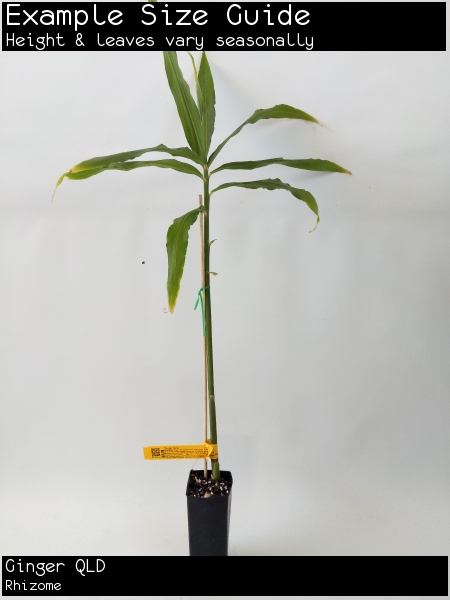
Ginger QLD
$19.75 ($3.00-$19.75 choose a size)
Hardy ginger variety, very popular in a range of cooking. Aromatic perennial plant with a pungent rhizome that is used as a spice, flavouring, food, and traditional medicine. In cool climates can perform very well as a pot plant and is easy to harvest all year round by digging fresh tubers as you need them. Young rhizome is pink skinned and the texture is much softer. The leafy stems of ginger grow about a metre high and lend a tropical feel to gardens. Provide good amounts of organic matter and keep well watered right through the growing season for best production


Pre Order Options
Jerusalem Artichoke
$14.90 ($4.90-$18.75 choose a size)
A Jerusalem artichoke is a white-fleshed root vegetable that is related to the Sunflower. The plant is upright, tall-growing with bristly woody stems, green pointed leaves, and golden-yellow flowers similar to the sunflower. The edible tubers are elongated, knobby, white, red or purple skinned. Several tubers are clustered at the base of each stem. The tubers can be eaten raw or cooked and the flavour improves if they are left in the ground until frosted. It is not related to the thistle-like globe artichoke, even though they taste rather similar. It is used in a popular creamy soup in France. Best planted in the spring or early summer for good tuber production. Appreciates well drained and friable soils. Raised garden beds can be useful where you have heavier soil types. Keep them well mulched and visit them regularly to enjoy their fine presence in your garden.


Pre Order Options
Drumstick Tree ( Moringa )
$34.00 ($19.75-$49.00 choose a size)
Also known as Horseradish tree or Tree of Life. It is considered one of the most useful trees in the world by some. In Asia, the peeled roots are used as a substitute for horseradish and the edible leaves make a highly nutritious vegetable. It produces long green pods that have been compared to a cross between peanuts and asparagus. Claims are made that its tiny leaves contains 7 times the Vit C of oranges, 4 times the Vit A of Carrots, 4 times the Calcium of milk, 3 times the Potassium of Bananas, and 2 times the protein of yogurt. The roots have also been documented as useful in many folk remedies. It originates in India and has spread in popularity to many parts of Asia, Central and South America, Africa and the Pacific. In Africa it has been also called the Miracle Tree with so many uses. This tree has delicate foliage and attractive pale yellow flowers. The slender, semi -deciduous, perennial tree, to about 10 m tall with drooping branches. Best kept pruned under 2m for ease of harvest. Thrives in subtropical and tropical climates, flowering and fruiting freely and continuously. Grows best on a dry sandy soil. Makes an ideal shade tree with high drought resistance. In temperate climates it may be beneficial to grow in pots for the first year or 2 when the tuberous root system can establish in a warmer position with sun on the pot. When larger they can be planted out, but still expect some dying back over winter as normal. Feed for best results, growers report good results from periodic fertilisation with good quality fertiliser, foliar sprays of seasol and the periodic application of Epsom salts if your soil requires. (Source: Nutritive Value of Indian Foods, by C. Gopalan) PLEASE NOTE: The foliage is delicate on young trees, and our potted plants are known for their older leaves to turn yellow and drop during transport to conserve energy. This is not a problem long term. With care and acclimatisation they will bounce backWARNING: Recent testing by the Australian Dept of Agriculture, Fisheries and Forestry to determine whether this 'novel' food (ie something that is not an ordinary part of the average Australian diet) is safe to eat, found that "Incomplete or inconclusive safety data means the risk cannot be adequately assessed and the safety of Moringa oleifera as a food cannot be confirmed." Therefore it is illegal to sell as a food or food ingredient.Daleys makes no claims to its edibility, but outlines historical, traditional uses in other parts of the world. https://www.agriculture.gov.au/biosecurity-trade/import/goods/food/notices/ifn05-26


Pre Order Options
Pepper - Black
$29.00 ($29.00-$39.00 choose a size)
Cultivated for the fruit which is dried and used as a spice and seasoning. The fruits are dark red when fully ripe. Immature fruits can be picked as green pepper, black pepper is the fruit dried with the skin on and white pepper is the dried seed only. Black pepper is the worlds most widely traded spice.


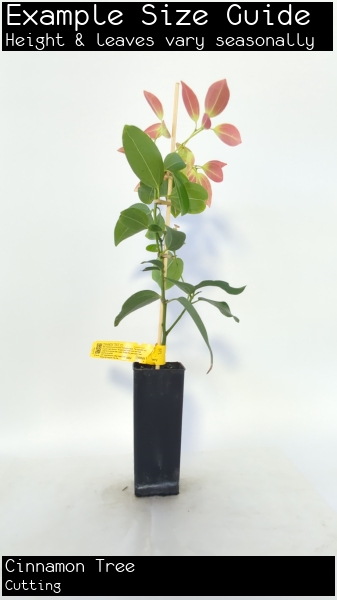
Cinnamon Tree
$39.00 ($27.00-$49.00 choose a size)
Highly ornamental tree and the source of cinnamon spice. The beautiful red new growth is highly distinctive. The spice itself is the inner bark that is peeled from the branches after 2 years. Scrape the outer bark, then peel the inner bark, leave for a day so that the inner bark curls into cinnamon sticks as it dries. They are distinctive in the many layered quill they produce that, when crushed, will shard rather than snap. Cinnamon is a very elegant and useful aromatic, much kinder to the palate than other spices. It imparts a distinctively sweet flavour when used. The leaves themselves are higher in clove oil than cinnamaldehyde, the active component of the sweet aromatic scent of cinnamon. Weed Warning: Can be invasive in tropical areas


Vanilla Vine
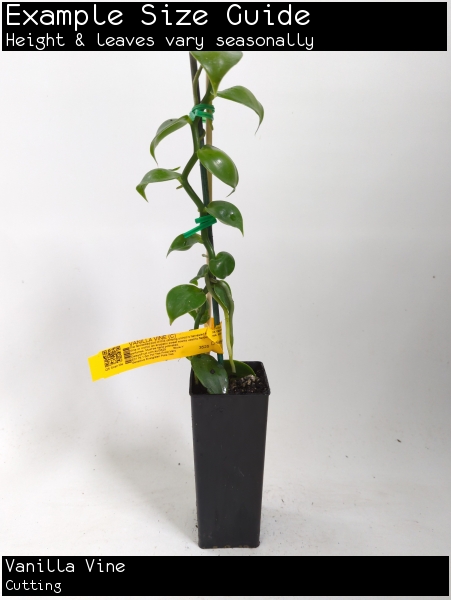
$29.00 ($24.00-$39.00 choose a size)
The fermented pod of this climbing orchid is harvested from the Vanilla Vine or orchid, an aromatic sweet scents used to flavour cakes, and perfumes. Must be hand pollinated. The only insect capable of pollinating the blossom is the Melipona, a bee (see video) , native only to Mexico so all plants must be hand pollinated within 12 hours of the flower opening. The pods take nine month to develop.

Ginger - Shampoo
$29.00 ($29.00-$39.00 choose a size)
A beautiful Ginger plant for tropical and subtropical gardens. It releases a lovely fragrant sudsy liquid when the red flowers are squeezed gently. Grow in full sun to partial shade in free draining soil. Keep the plant moist during the growing season and reduce watering when it is dormant in cooler seasons. Liquid harvested from the plant can be stored in the freezer for use at other times for example if you want the luxury of washing your hair with this gorgeous natural shampoo alternative in Winter. During summer the flowers will refill with the gingery fragrant liquid in 3 to 4 days. Enjoy your beautiful plant!


Yacon - Apple of the Earth
$19.75 ($4.90-$19.75 choose a size)
Also known as the 'Earth Apple' this is one of the ancient crops of the Inca's. This relative of the sunflower is popular to the people of Columbia, Ecuador and Argentina. The plant produces large tubers similar in appearance to sweet potatoes, but they have a much sweeter taste and crunchy flesh. The tubers can be eaten raw as a refreshing treat on their own, finely sliced and mixed into salads,boiled or baked, fried as chips or prepared as a pickle. There is also commercial interest as a flavouring for yoghurt. They are sweet, juicy and almost calorie free. The main stem can also be used like celery. The texture and flavour have been described as a cross between a fresh apple and watermelon. The plants are vigorous, herbaceous, perennial and extremely hardy tolerating hot summers, drought and poor soils. The foliage of the plant dies back in the winter after flowering at which time the tubers are harvested carefully to avoid damage to the tubers. They tend to continue sweetening if left in a cool dry and dark place for a week or two before consumption. The reddish rhizomes are then replanted for the next season.


Wasabi - Mazuma
$39.00 ($29.00-$39.00 choose a size)
Extremely strong pungency that is akin to hot mustard, wasabi produces vapours that stimulate the nasal passages more than the tongue. Generally used as a sauce that makes sushi or other foods more flavourful by adding spice. Use the stem sparingly and finely grated. Grows naturally along stream beds in cool mountain rivers valleys of Japan. Challenging to grow in Australia. Requires cool, moist, shaded conditions to thrive. It takes about 18 month - 2 years for plants to mature, in the meantime use the leaves and the leaf stems in salads, curries and pickled accompaniments.

Tree Collard
$24.90 ($4.90-$24.90 choose a size)
This perennial brassica is excellent for a continual supply of greens, sweeter and Tastier than regular collards. The leaves turn purple in cold weather. High in calcium any excess leaves can be fed to your chickens. The trunk and branches get woody after three years so it is a good idea to take cutting after 18 months - 2 years while the top branches are still tender.
Torch Ginger - Thai Pink
$49.00
Stunning pink flowers are fresh and zesty tasting, a favourite in SE Asian cooking. Plants produce large flower spikes in summer and are a stunning addition to gardens, both tropical and subtropical. A very large ginger that in optimum conditions can reach 2-5m in height. Likes part shade and a rich, well drained soil. Fertilise and keep moist for great blooms. The entire plant is edible, including seeds, flowers and leaves.

Sweet Potato - Molokai Purple
$17.90
Vibrant, purple flesh and dark skinned tuber. High in anthocyanins, sweet but starchier than other types. Originating in South America, these purple fleshed varieties were taken across the Pacific by the Spanish to Japan and then by the Japanese to Hawaii. They have been used in a range of traditional recipes from sweet to savoury.

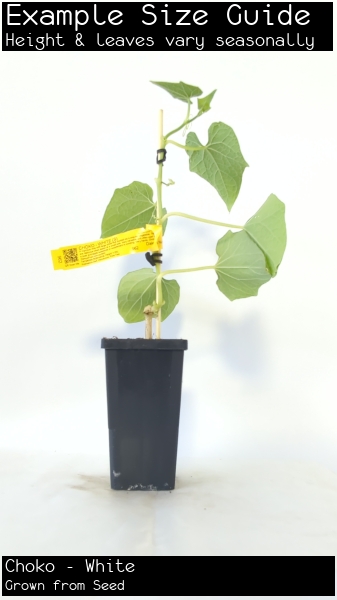
Choko - White
$19.75 ($7.75-$19.75 choose a size)
A vigorous vine with large white fruit cooked as a popular vegetable. They are delicious when eaten at a small size. Very versatile and often used as a pear and apple substitute or supplement in cooking. Very hardy. Choko plants are perennial but die back in winter and the tuber will sprout again in spring. They grow best in hot conditions and are frost tender so chose a site that gets full sun to plant your chokos.

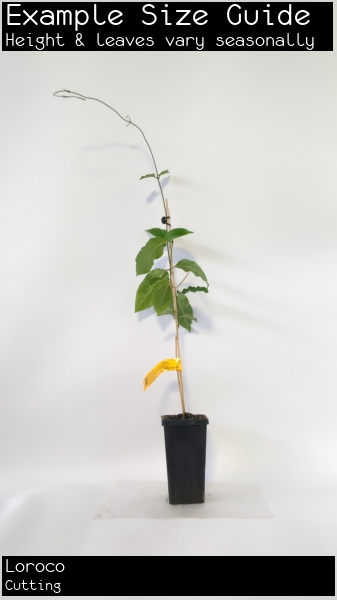
Loroco
$39.00
Lorocco is a vine grown for its edible, unopened flower buds. The flowers set in large clusters and their texture is crisp and succulent. The flavour is reminiscent of vegetables, such as artichoke and chard, with a floral sweetness. Sweet, tangy and robust tasting, it is a popular part of El Salvadorean cuisine.
Mushroom - Shiitake Grow Kit
$39.00
Edible mushroom native to East Asia, grown in conditions similar to their natural environment on either artificial substrate or hardwood logs, such as oak. These are delicate live organisms, ready to complete their life cycle. We will move them on quickly when they are ready so they cannot be added to or combined into any other orders or with any other plants. Fresh or dried shiitake are used as an ingredient in many steamed and simmered dishes, they may be served fried or steamed. Aussie Mushrooms Grow Kit - 100% Australian Made Shiitake Lentinula edodes (High Yeild Strain) If your not ready to start your kit keep it in your fridge until you are ready (up to 2 months) Step 1, Cut the top off the bag and fill with Cold Water until the Block is submerged let the Log soak in the water for 12 hours, (put something heavy on the Log so its submerged in the water) Step 2, put a Brick in a large bucket or container and some water in the Bottom no more than Half way up the brick, Sit your log on the Brick out of the water as pictured below, and cover the top of the Bucket with some plastic leave a small gap for air exchange (approx 20%) Mist with water 2 times per day, Keep the walls of your bucket wet and your log moist, when the mushrooms start to form do not spray the mushrooms directly. When your mushrooms are grown, Cut them off as close to the block as possible. Allow your block to rest for 10 days and repeat the process, You should get 3-4 flushes of mushrooms You do not need to eat your mushrooms all at once, They will keep in the fridge for 2 weeks in a paper bag. You should get around 500Grams from your first flush. When you harvest pick the large mushrooms leave the small ones until they are fully grown.Ideal Fruiting Temperature between 16-18C. Through summer, gardeners create shaded, moist, cool microclimates like the bucket described above.
Sweet Potato - Kumara
$18.75 ($4.90-$18.75 choose a size)
An Heirloom variety thought to originate in Polynesia, though the variety is also to be found throughout New Zealand. Tubers tend to be as large as sweet potatoes, with red skin and ivory flesh heavily marbled throughout in violet. This colour intensifies upon cooking. Especially creamy, Kumara is superb either mashed or baked. Contains high levels of Anthocyanins which has been studied for it's benefits with Alzheimer's Disease though it is best to research this or speak with an expert. Leaves are small and emerald-green running from dark purple petioles, and can be eaten as a substitute for any leafy green, such as Kale or Spinach either fresh or steamed. The shoot tips are especially tender.

Caper Bush
$24.00
The edible flower buds of Caper Bush are a delicacy in Mediterranean cooking and its use has spread all over the globe. Flower buds are salted and pickled to create the well known condiment. The fruit is also edible, raw or cooked. Widespread throughout the Mediteranean, Middle East and into the Indian subcontinent. The plant thrives in rocky, dry conditions from sea level to over 3000m above sea level but also adapts to areas of higher rainfall and humidity. Young plants may be sensitive to frost and heat but harden up with age. This is a small spiny shrub, well suited to pruning. It has an extensive root system which lends it drought tolerance, it also develops mycorrhizal relationships and has a preference for slightly alkaline soils but can adapt to others
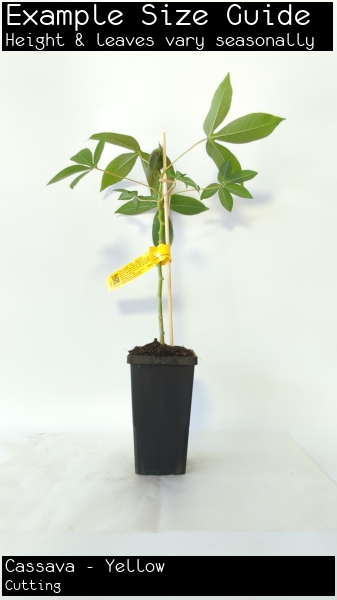
Cassava - Yellow
$21.00
The tuberous root is light yellow and flavour is richer than the white, tasting a lot like potato. This is the sweet variety producing smaller but more nutritious tubers. Harvest can start from earlier than 12 months. Tubers are best dug when small and used within a couple of days or stored in the ground on the plant.Cassava is a shrubby plant growing to about 1-3m, with thin stems and attractive large palm-shaped leaves. A perennial shrub cassava produces a high yield of tuberous roots in 6 months to 3 years after planting. The tubers are the main part that is eaten, but the leaves can be enjoyed as a vegetable dish. Cassava is an important daily source of starch for 300-600 million of the poorest people around the world. It is among the most productive uses of subsistence land, producing 40% more starch than rice, and 25% more than maize. Note that all cassava is poisonous!! In some bitter varieties, all parts of the plant are laced with a highly toxic poison (hydrocyanic or prussic acid). Sweet varieties have lower or marginal concentrations of the toxin. But the more toxic varieties produce bigger tubers! Plants from the tropics have evolved toxins as a defence against predators more so than those from temperate climates which is why they require cooking in order to eat them. Thorough cooking dispels or denatures the harmful toxins, and makes the remaining portion safe to eat. Powdered cassava is treated like a flour and made into cakes, unleavened bread, pasta, crackers. Sliced cassava is also made into crisps. Flat bread made from cassava meal can keep for a year without spoiling. Dried chips or pellets are used as animal feed. Young tender leaves are rich in Vitamin B and protein, but also has more of the toxins. They are eaten as a vegetable. Like the tubers, they have to be boiled for minimum 15-20 mins in an open topped vessel to remove their toxins.Best grown without the use of fertilisers as too much vegetative growth is promoted at the expense of tubers
Torch Ginger - James Pink
$49.00
Pink Waratah-like flowers are fresh and zesty tasting with a ginger-like flavour, a favourite in SE Asian cooking. Plants produce large flower spikes in summer and are a stunning addition to gardens, both tropical and subtropical. A very large ginger that in optimum conditions can reach 2-5m in height. Likes part shade and a rich, well drained soil. Fertilise and keep moist for great blooms. The entire plant is edible, including seeds, flowers and leaves.
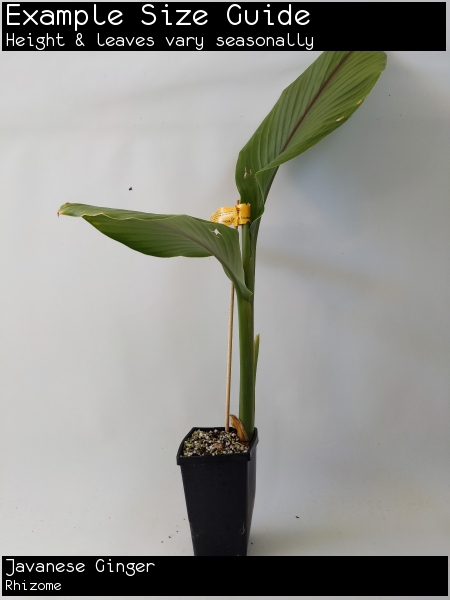
Javanese Ginger
$24.90 ($19.75-$24.90 choose a size)
This species bears a striking similarity to Cape York Turmeric. It differs in that the flower bracts are a deeper pink/purple colour as is the dark strip that runs up the centre of the leaf. Often used medicinally, in Bali a delicious drink is made by cooking dried slices of rhizome in water with palm sugar.

Choko - Green
$14.90 ($4.90-$14.90 choose a size)
A vigorous vine known for its large green fruit cooked as a popular vegetable. They are delicious when eaten at a small size. Very versatile and often used as a pear and apple substitute or supplement in cooking. Very hardy. The leaves, shoots, fruits and tubers are all eaten, making this an excellent plant to have around the garden and kitchen. It's growth can be kept in check be pruning or providing a strong trellis for the plant to climb. Fruits form quickly during the warm months and will continue over a long period of time. The vines will die back in winter as they are frost tender. Free draining soil is best and the plant will respond well to a feed of organic compost or manures during the growing season.An old fashioned plant that produces a tonne of fruit for modern times.


Popular in Category: Herbs, Spices & Perennial Vegetables
Special
Dwarf Coffee - Red Catuai
$19.75 ($7.90-$49.00 choose a size)
A dwarf coffee selection suitable for handpicking. Prolific cropper of quality roasting beans. Makes an ideal choice for growing in a pot in small yards and as an ornamental. An internationally important cultivar due to its compact size for efficient picking and crop protection. A mid season producer of quality beans. The lineage of this cultivar is Mundo Novo x Caturra and it was released in Brazil in the 70s. For good production plant in rich free draining soil in full sun to part shade location with regular watering. Coffee fruits can also be eaten and have a pleasant sweetish taste. Red Catuai is the main variety grown commercially in Nth Qld and does have some susceptibility to leaf rust and other common coffee plant pests.


Click Choose above to view Specials
Curry Tree
$19.90 ($18.90-$79.00 choose a size)
Fresh leaves from this tree are an indispensable ingredient in Indian cooking. The leaves are pretty much unknown in the West because they lose most of their flavour when dried. They have a distinct, spicy curry-like flavour and odour.Warning: The seeds are poisonous and should not be eaten
Click Choose above to view Specials
Special
Pigeon Pea
$3.90 ($3.90-$18.90 choose a size)
A woody, fast growing leguminous shrub, to 5m, with yellow and red flowers. It is hardy, widely adaptable and tolerant of temperatures as high as 35C. It can be killed by heavy frost. The seeds are 25% protein, can be eaten fresh or as split dried peas, are used for dhal in India, contain 5 times more Vitamin A and C than green peas. The leaves and young shoots can be eaten cooked, they are fibrous and have a strong spicy odour. Animal Fodder; an excellent feed for cattle, pigs and poultry. Green Manure; incorporate the plants as they flower. Mulch production; can be cut many times in a season. Windbreaks; suitable as a shelter belt around vegetable gardens and plants provide nitrogen, habitat and soil stabilisation. Permaculture - plant on west side of newly planted trees to provide wind and sun shelter and a ready source of mulch. Prune back to control growth and use as mulch on your young tree.
Buy 16+ @$3.90ea usually:$4.90ea
Carob
$17.90 ($17.90-$39.00 choose a size)
This elegant tree is often referred to as fake chocolate due to its similarities to cocoa in taste and texture. A Mediterranean tree, favouring arid conditions. Seedlings can be Male, Female, or bisexual. Prefers well drained soil.
Achiote - Bixa
$17.75 ($4.95-$19.75 choose a size)
Also known as Annatto or the Lipstick tree, originates from South America and has spread in popularity to many parts of Asia. It is very popular in Philippine cooking. Grows and a dense small tree or shrub. The heart shaped fruits are brown or reddish brown at maturity, and are covered with short stiff hairs. When fully mature the fruits split open exposing the numerous dark red seeds. While the fruit itself is not edible, the orange-red pulp that covers the seed is used as a commercial food colouring and dye (similar to turmeric). The achiote dye is prepared by stirring the seeds in water, and is popular in South America and Asia to colour rice, desserts, butter, cheese, and many other foods. In the Philippine Islands the seeds are ground and used as a condiment. Tree is extremely beautiful in full flowering and fruiting. Can be grown in a container, prefers a frost-free climate.
Aramex Free Freight
Timut Pepper
$39.00
Small berries have a grapefruit like flavour and have a tingling or numbing effect on the tongue. The plant is attractive with glossy foliage and stems but robust thorns on the trunk, branches and leaves Used in Nepali and Indian traditional medicine, the plant is also one of the sources of Sichuan pepper, though it is milder. This selection has both female and male flowers on the one plant. The plant makes an excellent pruned hedge fence. WEED WARNING: this plant has the potential to spread outside gardens and into bush and agricultural land. Harvest all fruit and net the pruned shrub to prevent bird spread.
Chilli - Jalapeno
$4.90 ($4.90-$14.75 choose a size)
A high yielding, very popular chilli with medium heat levels. Prominent chilli in Mexican cuisine. It can be picked green or left to mature to a rich red colour. It can be cooked, dried, pickled or eaten fresh
Myoga Ginger
$19.90 ($18.75-$19.90 choose a size)
a native of Japan where it is grown commercially for its delicious spring shoots and young flower buds produced in autumn. Myoga flower buds are used in soups, tempura, pickled and as a spice. Like most gingers it is an understory of forests and so grows best under some shade. It can get sunburned leaves which will reduce its vigor if grown in full sun. In winter the top growth dies back and it regenerates in spring from the underground rhizomes.
Click Choose above to view Specials
Special
Aloe Vera
$12.75 ($12.75-$19.75 choose a size)
The healing powers of the Aloe Vera plant have been known throughout the civilised world for centuries. While considered by many to be a member of the cactus family it is actually a member of a family related to asparagus along with onion and garlic.It is a perennial herb with thick, succulent, pointed, basal leaves. The leaves are a grey-green to reddish colour and are sometimes spotted. The margins are slightly pink with pale teeth; flowers orange in terminal, elongated clusters.Currently known as Aloe barbadensis it is now agreed that Aloe vera can take precedence. That's much easier for us to remember and the vera distinguishes the more popular garden aloe from that of the A. maculata which is a much larger and more vigorous plant that has become naturalised in the eastern and southern parts of the continent.
Buy 3+ @$12.75ea usually:$18.75ea Aramex Free Freight
Special
Tea Plant
$17.90 ($4.90-$19.90 choose a size)
Makes an attractive hedge with the added bonus of providing your own tea if you wish to dry the new leaf tips. The fragrant white flowers are an added bonus to this compact glossy leaved bush.
Buy 2+ @$17.90ea usually:$19.90ea