







Elephant Apple fruiting in Brisbane Botanical Gardens in March 2022

(1/8) Elephant Apple fruiting in Brisbane Botanical Gardens in March 2022

An interesting fruit that is well regarded for its acidity, aromatica and pungency when added to curries and pickles. This is an unripe fruit. Yellow when ripe.

(2/8) An interesting fruit that is well regarded for its acidity, aromatica and pungency when added to curries and pickles. This is an unripe fruit. Yellow when ripe.

Elephant Apple Tree

(3/8) Elephant Apple Tree

Elephant Apple

(4/8) Elephant Apple

Elephant Apple For Sale

(5/8) Elephant Apple For Sale

Elephant Apple For Sale

(6/8) Elephant Apple For Sale

Elephant Apple For Sale

(7/8) Elephant Apple For Sale

Leaf of the Elephant Apple

(8/8) Leaf of the Elephant Apple

fullscreen1

Elephant Apple

Dillenia indica
Medium sized tree to 15m, attractive corrugated foliage. The knobbly fruits can be used in curries, jellies and jams. Highly ornamental fragrant flowers. Prefers a tropical location, marginal in the subtropics. Great for Food Forest canopy tree. Fruits ar... Read More
Other Names: Ou tenga, Chalta

$4.90 ($4.90-$29.00 choose a size)

Shop Similar

event_busy When will it be in Stock?

We previously had the most to buy in Sep and Jul. With limited quantities for sale in other months. They are unlikely to be available in Dec and Apr. Remember to click above to get notified when it is available once more.

Specifications of Elephant Apple

Preferred Climate Tropical, SubtropicalLearn About Climate Zones

Grown From SeedlingLearn About Propagation Methods

Max Height (when in the ground with good conditions) +10m

Plants required to Pollinate 1 (Self Pollinating)Learn about Pollination

Can it Handle Frosts? Likes Temps above 5deg, Sometimes

Amount of leaves in Winter? All Leaves (Evergreen)

Water Requirements Moderate Watering

Is it a Dwarf Fruit Tree? No (Full Size)

Time to Fruit/Flower/Harvest 5+ Years

Sun or Shade Full (Sun:80%-100%)

Preferred Soil Type Good Drainage

Soil pH Neutral (6.6-7.3pH)

Fruiting/Harvest Months March

Create a Filter to find similar plants

Customers also bought

These plants are often purchased together. Also check plant information for suitability in your orchard.

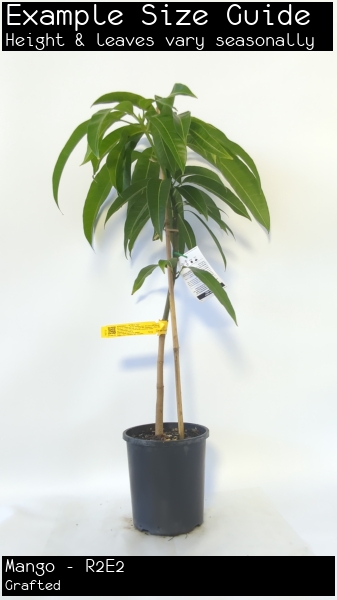
Mango - R2E2

$27.00 ($19.75-$89.00 choose a size)

One of the largest and most attractive fruits with good, sweet flavour. High flesh to seed ratio with very slight fibre. Susceptible to Black Spot and Anthracnose. It has proven to be a consistent cropper over a range of climates. Vigorous growth habit. wt 675gms. It can be purchased as a more expensive grafted variety which will fruit earlier and have a known cultivar or cheaper seedling plants which are more hardy than the grafted selection and these seedling plants although they take longer to fruit and establish.

Mango - Keow Savoey

$69.00

Considered the best of the green eating varieties in Thailand where it is prized for its crunchy flesh texture and nutty sweet flavour. It is mainly used as a green salad vegetable. When ripe it turns a soft green/yellow. Semi-translucent pulp with overripe flavours. Oblong dark green fruit weighing between 170 and 390 grams with a polyembryonic seed

Dwarf Peach - Sunset Backyard Beauty

$79.00 ($59.00-$79.00 choose a size)

High density flowering of double pink peach blossom in spring makes this tree a delight in the garden, it produces white fleshed full sized freestone peaches in early summer Often ripening in time for Christmas PBR No pollination required. Sometimes referred to as a Super Dwarf Peach Tree. This is an ideal tree to get the kids involved in growing their own fruit in the garden! This variety is subject to Plant Breeder Rights.

Lychee - Wai Chee

$49.00 ($49.00-$79.00 choose a size)

Crops heavily and regularly in subtropical climates with high quality delicious fruit. Compact growth habit. Freshly picked Lychees are absolutely delicious compared to canned or supermarket fruit. Prefers sheltered, rich well drained soil, with lots organic mulch, and cool winters. Late season
  Special  

Cassava - Yellow

$17.90 ($17.90-$21.00 choose a size)

The tuberous root is light yellow and flavour is richer than the white, tasting a lot like potato. This is the sweet variety producing smaller but more nutritious tubers. Harvest can start from earlier than 12 months. Tubers are best dug when small and used within a couple of days or stored in the ground on the plant.Cassava is a shrubby plant growing to about 1-3m, with thin stems and attractive large palm-shaped leaves. A perennial shrub cassava produces a high yield of tuberous roots in 6 months to 3 years after planting. The tubers are the main part that is eaten, but the leaves can be enjoyed as a vegetable dish. Cassava is an important daily source of starch for 300-600 million of the poorest people around the world. It is among the most productive uses of subsistence land, producing 40% more starch than rice, and 25% more than maize. Note that all cassava is poisonous!! In some bitter varieties, all parts of the plant are laced with a highly toxic poison (hydrocyanic or prussic acid). Sweet varieties have lower or marginal concentrations of the toxin. But the more toxic varieties produce bigger tubers! Plants from the tropics have evolved toxins as a defence against predators more so than those from temperate climates which is why they require cooking in order to eat them. Thorough cooking dispels or denatures the harmful toxins, and makes the remaining portion safe to eat. Powdered cassava is treated like a flour and made into cakes, unleavened bread, pasta, crackers. Sliced cassava is also made into crisps. Flat bread made from cassava meal can keep for a year without spoiling. Dried chips or pellets are used as animal feed. Young tender leaves are rich in Vitamin B and protein, but also has more of the toxins. They are eaten as a vegetable. Like the tubers, they have to be boiled for minimum 15-20 mins in an open topped vessel to remove their toxins.Best grown without the use of fertilisers as too much vegetative growth is promoted at the expense of tubers
Buy 2+ @$17.90ea usually:$21.00ea

Yellow Mangosteen

$34.00 ($24.00-$79.00 choose a size)
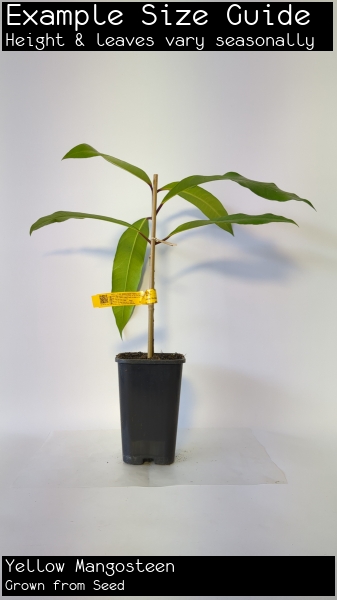
Yellow Mangosteen is a round fruit with very tart yellow segments. The high acidity makes it ideal for jams and jellies but removing the seed and skin can be time consuming. Easier to grow in the subtropics than the purple mangosteen, but the flavour is altogether different. The tree grows well in full sun and shade. It will tolerate and continue to fruit heavily in drought conditions. The tree is very attractive, with large drooping leaves and a layered form. The fruit can reach 8-10 cm in length and looks highly ornamental when in the tree. Pairs so well with a Miracle Fruit to reduce the acid flavour and bring out the interesting tropical flavours.

Elephant Apple Reviews & Tips

Star Rating

Darren
★★★★★ 2y ago

ROLEYSTONE, WA

Elephant Apple

Easy care. Attractive shape, foliage and flowers.

Scott 10
10y ago

Redlands, QLD, Australia

Elephant apple

I have one of these and it is a lovely tree. Almost 6m high and still growing. Does make a bit of mess when it drops its leaves but new growth is worth it. The fruit is certainly an 'acquired' taste but worth it just for the tree.

Pete Mclaughlin
12y ago

Dayboro, QLD, Australia

Elephant apple

Lovely one growing at Mt Coot-tha Botanic Garden in Brisbane, in the indian plant/rainforest area with fallen fruit.

Robyn West
12y ago

Townsville, QLD, Australia, Australia

Elephant apple

Just found out that seeds I found in our cemetary are Elephant Apple. Picked a couple to take to nursery to see if they knew what they were and just found them growing at Palmetum in Townsville and had a sign telling us what it was.

Bill Wilkinson
14y ago

Gympie, QLD

Elephant apple

Planted a EA near Gympie 2 yrs ago. Already nearly 2 metres and has not been affected by one or two frosts.Fantastic tree and there is/was a huge one at Murwillumbah Hospital. Bill W.


  • Subscribe
  • Postage Free Truck
  • Plant List
  • Calculate Freight